We've moved next door! Our container dealership office is now at D3-1764 Kelly Douglas Rd, Kamloops.

Get directions

Logistics Guide

Container Delivery Across BC: What You Need to Know

A smooth delivery day starts with good preparation. This guide covers everything from site access to final placement to ensure your container arrives without a hitch.
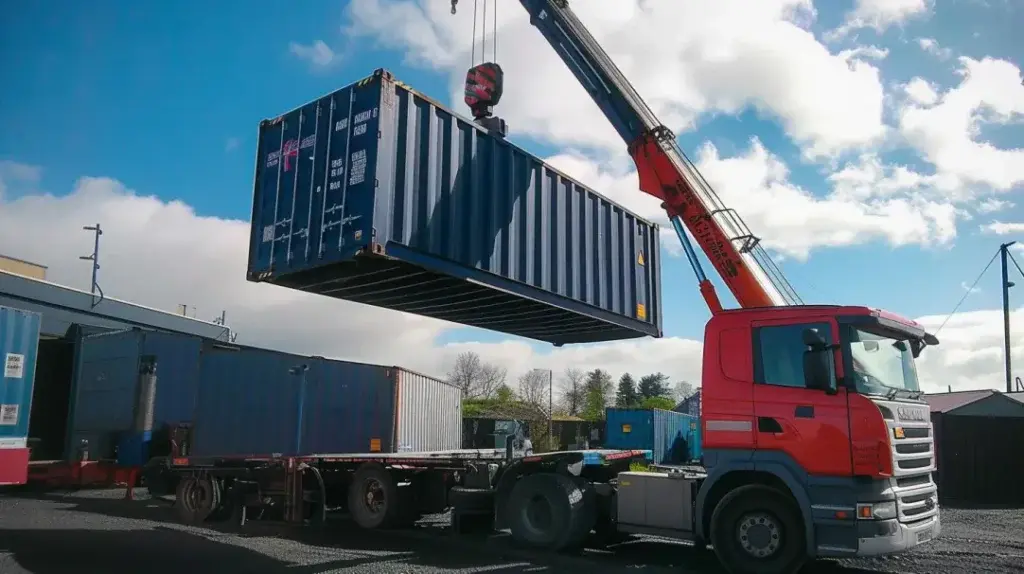
A delivery truck placing a shipping container in a prepared site in BC

You've chosen your container, and you're ready for it to arrive. But getting a 2.5-ton steel box to your property—whether it's in downtown Kelowna or a remote site near Prince George—requires careful planning. At Valleyview Containers, we pride ourselves on our reliable delivery service across British Columbia. Here's what you need to do to ensure a seamless delivery experience.

The Delivery Vehicle: Understanding the Tilt Deck Truck

We primarily use tilt deck (also known as tilt bed) trucks for our deliveries. These trucks have a flatbed that hydraulically tilts down to the ground, allowing the container to slide off smoothly. This method is efficient and requires minimal equipment.

Here are the key space requirements for our trucks:

  • Straight Line Clearance: For a 20ft container on our pickup-and-tilt-trailer rig, 72 feet of total clear length measured in a straight line — including the container's final resting position. A 40ft container needs at least 110 feet, measured the same way.
  • Width Clearance: The truck needs at least 10-12 feet of width to maneuver safely. This includes gates, driveways, and paths.
  • Overhead Clearance: For a 20ft container, we require a minimum of 16 feet of vertical clearance, free from any power lines, tree branches, or building overhangs. A 40ft needs more while the deck tilts, so ask for the height your site needs.

Crucial Pre-Delivery Check

Before scheduling, walk the entire delivery path from the main road to your desired drop spot. Look for tight turns, low-hanging branches, soft ground, and any other potential obstacles. Taking photos or a video of the path can be extremely helpful for our logistics team.

Our 30-second delivery guide — the 72 feet of clear length a 20-foot container needs, the ground, the access and when to call ahead. Full checklist and transcript →

Site Preparation Checklist

Your container needs a solid, level foundation to ensure the doors operate correctly and to prevent sinking or warping over time. An improperly prepared site is the #1 cause of delivery issues.

Your 4-Step Preparation Plan:

  1. Choose a Level Spot: The ground must be as level as possible. A container placed on uneven ground will twist, making the doors extremely difficult to open and close.
  2. Ensure a Solid Foundation: The site must be firm and dry. Avoid areas that are prone to flooding or have soft soil. Compacted gravel, asphalt, or concrete pads are ideal.
  3. Use Blocks for Support (Recommended): We strongly recommend placing the container on supports like pressure-treated wood blocks, concrete blocks, or railway ties. This elevates the container, preventing moisture from accumulating underneath and ensuring airflow, which significantly reduces the risk of rust.
  4. Clear the Area: Make sure the drop location and the surrounding area are completely clear of debris, vehicles, and other obstructions.

On Delivery Day

Our driver will call you when they are on their way. It's important that you or a designated representative is on-site to meet them.

  • Final Placement Discussion: You'll confirm the exact placement and orientation with the driver. Do you want the doors facing the house or away from it? This is the time to decide.
  • Safety First: For everyone's safety, please keep a clear distance while the driver is unloading the container. Our drivers are professionals, but this is a heavy piece of equipment.
  • Inspect the Container: Once the container is placed, take a moment to inspect it and ensure it meets your expectations. Check the doors, floor, and overall condition.

By following this guide, you can ensure your container delivery is fast, safe, and stress-free. Our goal is to get you your storage solution as efficiently as possible, so you can start using it right away.

Service Areas Across BC

We deliver throughout Interior, Northern, and Kootenay BC. Common destinations include Kamloops, Williams Lake, 100 Mile House, Cranbrook, and dozens of smaller communities. Not sure if we cover your area? Contact us and we'll confirm.

Before booking, review our companion guides: 20ft vs 40ft sizing, the BC buyer's guide, and post-delivery maintenance tips. Ready to order? See current inventory or full product range.
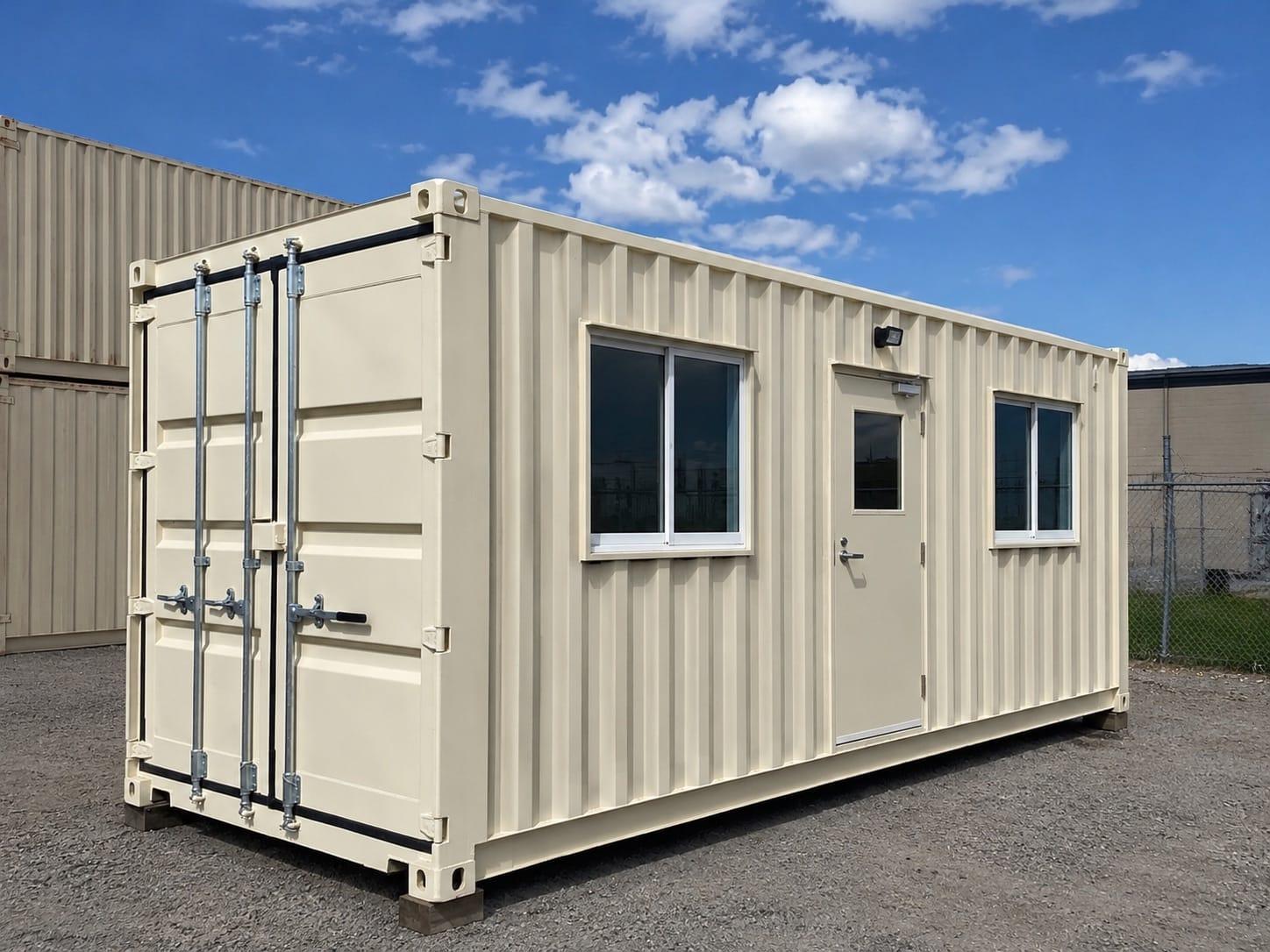
Custom 20ft shipping container site office with two sliding windows and a steel personnel door, built by Valleyview Containers in Kamloops, BC

Custom Solutions

Custom container solutions, built in Kamloops

Custom containers for work and for living: site offices, workshops, farm storage, cold storage, pop-up shops, bunkies and turnkey container homes — designed around your project, built in our own yard and delivered anywhere in BC. Insulated site offices from $14,600 CAD; bunkies and modular homes are quoted per project.

FAQ

Frequently asked questions

About this guide

Why does a tilt-deck delivery need 72 feet in a straight line?

Because the whole drop happens in one line. The truck lines up with the spot, its deck tilts down hydraulically and the container slides off the back onto the ground, and the truck can’t turn while that happens. For a 20ft on the pickup-and-tilt-trailer rig, 72 feet is the total clear length, measured straight, and it includes the spot where the container will finally sit. A 40ft needs at least 110 feet, measured the same way, plus more overhead room while the deck tilts, so ask for the height your site needs when you book.

Watch the delivery guide
Do the width and overhead clearances apply to the whole route or just the drop spot?

The whole route. The truck needs at least 10 to 12 feet of width everywhere it travels, including gates, driveways and paths, and, for a 20ft, a minimum of 16 feet of vertical clearance, free of power lines, tree branches and building overhangs, all the way to the drop spot; a 40ft needs more while the deck tilts, so ask for the height your site needs. Measure the narrowest gate and the lowest wire or limb along the way, including the hydro service drop to the house, before you book.

How do I walk my delivery path before booking?

Start at the main road and walk every metre to the spot where you want the container, looking for tight turns, low-hanging branches and wires, soft ground, narrow gates and anything parked in the way. Take photos or a video as you go and send them with your quote request. Before the truck arrives, move vehicles, mark utility lines and clear the drop area of debris and other obstructions.

Can Valleyview assess my property without coming out to see it?

In many cases, yes. Valleyview can often assess a property from satellite imagery or a quick video call, using the photos or video you took walking the route. For an off-grid or rural site without a clear civic address, send GPS coordinates so the right spot can be found. If anything looks doubtful, it can be sorted out before you order, which is far easier than finding the problem on delivery day.

Contact Valleyview
Is gravel, asphalt or concrete the right surface for a container?

Any of the three works if it is firm, dry and level. A compacted gravel pad drains well and gives a level base for a storage container; existing asphalt works where it is level and sheds water away from the container; a concrete slab suits permanent installations and heavy use. Whatever the surface, avoid low spots that flood and soft soil, and plan on blocks under the corners to lift the steel off it.

Are blocks under a shipping container required or just recommended?

Valleyview recommends them rather than requiring them for a storage container. Pressure-treated wood blocks, concrete blocks or railway ties under the corners raise the container so air moves underneath and moisture doesn’t collect against the steel, which reduces the risk of rust. Set them on firm ground and level with each other before the truck arrives, because the trailer tilts and the container slides onto whatever is there. Ask your local government whether your use and location carry foundation requirements.

Does the spot need to be level if the container is only for storage?

Yes. A container set on uneven ground twists, which makes the doors very hard to open and close, and doors that don’t close squarely can’t seal or lock properly. Those doors are what keep weather and thieves out of a storage unit. Get the spot level end to end and side to side, with any blocks level with each other, before delivery day, while nothing is sitting on them.

How close to my house or fence can the container be dropped?

As close as the truck’s straight approach and local rules allow. The truck needs at least 10 to 12 feet of width along its whole path, so a gap that only fits the 8ft-wide container won’t work for a tilt-deck drop. Keep the spot clear of eaves and wires within the overhead clearance the delivery needs (16 feet for a 20ft, more for a 40ft), leave room for the doors to swing, and ask your municipality or regional district what setbacks apply first.

What will I need to decide with the driver on delivery day?

Exactly where the container sits and which way the doors face. The driver calls when they are on the way, and you or someone you designate must be there to confirm placement, inspect the container and sign the delivery receipt. Decide beforehand: doors toward the house or work area are easier to keep an eye on, and they need clear, level room in front to swing open. Mark the corners so the spot lines up with the truck’s straight approach.

Where should I stand while the container is being unloaded?

Well back, beside or behind the moving container and never in front of it. The deck tilts and the container slides off the back, so give the operator room to work and keep children, pets and everyone else clear until the container is down. Once it has settled, walk around it and check the doors, floor and overall condition, and note any damage on the delivery receipt before you sign.

Does Valleyview deliver containers to Metro Vancouver, Vancouver Island and the coast?

Yes. Valleyview delivers across all of British Columbia from its Kamloops yard, including Metro Vancouver, the Fraser Valley, the Sea-to-Sky, the Sunshine Coast and Vancouver Island, as well as the Interior, the North and the Kootenays. Vancouver Island, Sunshine Coast and Gulf Island deliveries are ferry-served, and the ferry is part of the delivery quote. Every delivery is quoted by distance and site access.

See the service area
What should I tell Valleyview about my site when I book delivery?

Everything the truck will meet. Give the delivery address, the container size, the narrowest gate width, any wires or branches along the route or over the drop spot and how high they are, tight turns or slopes on the route, what the ground is like at the drop spot, and what the container will sit on. Valleyview’s terms make the buyer responsible for giving accurate information about access, clearance and ground conditions, and for providing a suitable, level site, so check each figure before you send it.

Sizes & specs

Can I stack pallets two high in a shipping container?

In a high cube, usually yes; in a standard-height container, usually not. A loaded pallet at a typical four-foot build height stacks two high at roughly 8 feet, which clears a high cube’s interior height of about 8ft 10in but not a standard container’s 7ft 10in. Check the door opening for your forklift too, about 8ft 5in on a high cube, and plan rows around the interior width of about 7ft 8in.

What is the difference between a high cube and a standard container?

A high cube is one foot taller: 9ft 6in outside instead of 8ft 6in, with about 8ft 10in of interior height instead of about 7ft 10in. It is not longer or wider, so it sits on the same footprint and needs the same level, well-drained ground. High cubes are built to the same ISO standards from the same CORTEN steel, and a 40ft high cube holds about 2,690 cubic feet against about 2,390 for a standard 40ft.

High cube vs standard

New & used containers

What do the grades “WWT” and “as-is” mean when comparing containers?

They are trade grades below cargo-worthy. WWT is a unit that is still wind and watertight but not certified for ocean shipping, and it usually shows more cosmetic wear. As-is means sold without any weather-tight promise; it may have a pinhole leak, a patched repair or a sticky door, so inspect it in person. Valleyview’s catalogue grades are new and used cargo-worthy, so ask what any other grade term on a quote or listing means.

Prices

What’s the lowest-priced shipping container you sell?

A used 20ft container has the lowest starting price in Valleyview’s catalogue, listed at $2,500–$3,000 plus tax and delivery. It has been in shipping service, so expect surface rust and dents, but it’s inspected and wind and watertight before it’s sold. Listed prices can change, so your quote confirms the final figure along with delivery to your site.

What does a new 20ft shipping container cost?

A new one-trip 20ft container is listed at $3,700–$4,200 plus tax and delivery. One-trip means it was loaded once for a single voyage, so it is structurally new, with factory paint and minimal wear. New 20ft units come in a range of factory RAL colours, and pricing varies slightly by colour, so ask for the current colours when you request a quote.

Buying & paying

What happens after I accept a container quote?

Valleyview confirms the order with an invoice or confirmation, and the delivery terms, costs and schedule are agreed then. A deposit may be required, with full payment typically due before delivery. Before the truck arrives, make sure the spot is level and firm with clear access. On delivery day, you or someone you designate meets the driver, confirms placement, inspects the container and signs the delivery receipt.

Watch the delivery guide
Do I need to pay a deposit when I order a container?

A deposit may be required to secure your order. The amount isn’t published on the website; it’s set out with your quote and invoice, along with the rest of the payment terms. Ask about the deposit when you receive your quote so you know what’s needed to confirm the order and how the remaining balance will be handled.

Delivery

Can I pick up a container from the yard myself?

Ask first, because customer pickup isn’t a published option. Valleyview delivers by tilt-deck truck, so call (778) 694-4050 to ask whether collecting the unit you want is possible and what loading it would involve. If delivery suits you better, the delivery quote is free and is priced to the site the container is actually going to.

Is there a video that shows how container delivery works?

Yes. Valleyview’s 30-second illustrated delivery guide shows the pickup and 22-foot deckover tilt trailer used for a 20ft container, the 72 feet of total clear length it needs, checking gates and overhead space, why the path must be straight, and when to call ahead. It has captions and a full transcript. The clearances shown are for a 20ft; a 40ft needs at least 110 feet of clear length and more overhead room, so ask for the height your site needs when you book.

Watch the delivery guide

Preparing your site

Does a 40ft container need more site preparation than a 20ft?

It needs the same kind of preparation over a longer spot. The ground still has to be firm, level and well-drained, with support under the four corner castings, but on a 40ft those corners sit about 40 feet apart end to end, so check the whole length for soft or low spots and take more care getting all four level with each other. The truck needs more room too: at least 110 feet of straight, clear length including the container’s final spot, against 72 feet for a 20ft. It also needs more overhead room while the deck tilts, so ask for the height your site needs when you book.

Does a high cube container need different site prep from a standard container?

No. A high cube has the same footprint and the same four corner bearing points as a standard container of the same length, and it needs the same firm, level, well-drained ground. It is slightly heavier empty, which changes nothing about how you prepare the pad. The difference is height, about a foot more, which matters for overhead clearance on delivery day rather than for the ground it sits on.

Owning a container

Can I sell my container later if I no longer need it?

Yes. Once it is paid for, the container is your property to keep, move or sell. Valleyview does not advertise a buyback or trade-in, so plan on selling it yourself. A buyer will judge it the way you did, by the doors and seals, roof, floor, rust and unit number, so routine maintenance and good records make it easier to show its condition.

Why is water dripping inside my container when the roof doesn’t leak?

It is most likely condensation, often called container rain. Warm air holds more moisture than cold air, so when humid air inside the container meets cold steel, usually the roof on a cold morning, the moisture drops out onto the steel and runs or drips. It happens whether or not the container leaks. Breath, a propane heater, wet gear and damp ground all add moisture to the air inside.

Permits & bylaws

Should I check local rules before choosing a container size?

Yes. Get the setbacks, coverage limit and any height limit for your lot first, then choose the size. Mark the footprint on the ground where the container will sit, check it against those numbers, and leave room for the doors to swing open and for the delivery truck to line up and back in. If a 20ft will not fit the space the rules leave you, a 10ft has half the footprint.

Compare 20ft and 40ft

Custom builds

Which container is each custom build package based on?

Four start from an inspected used 20ft: the site office, workshop, farm and ranch storage and equipment enclosure packages. The pop-up shop starts from a new one-trip 20ft, cold storage from a 20ft refrigerated container, and the crew unit from a used 40ft high cube. Homes and garden suites use new one-trip 40ft high cubes, and a bunkie starts from a 20ft or a 40ft high cube, new or used, chosen for the layout. The base container is confirmed in your quote.

Business & lease-to-own

Can every container in a large order match in size, grade and colour?

Yes, matching is part of how fleet orders are filled. Valleyview sources multi-unit orders at volume so the units can share the same size, condition grade and colour, and custom RAL paint and the same branding layout can be applied across the whole order. Tell Valleyview the spec you want repeated, and the quote confirms what will be matched before you commit.

Refrigerated containers

Can I load warm product straight into a reefer?

Ideally not; pre-chill it first. A reefer is designed to maintain a set temperature, not to rapidly cool down warm cargo, so goods should be pre-chilled to about the temperature you want before they’re loaded. If product will arrive warm, tell Valleyview what it is, how much comes in at once and how often the doors will open, so the right setup can be recommended before you buy.

Uses

Can a shipping container be used as a bunkie or guest cabin?

Yes. A bunkie is a room to sleep in, usually built in a 20ft, or in a 40ft high cube when it needs two beds or a washroom. Insulation and framing are chosen for the site and the season you’ll use it, and a washroom with fresh-water and waste tanks, a water heater and a pump can be added. Valleyview quotes every bunkie per design rather than from a price list. People sleep in it, so ask your local government how it will be classified before you order.

Container bunkies

Still have a question? Call (778) 694-4050 or see the full FAQ.

Have Questions About Your Delivery?

If you're unsure about your site or have any questions about our delivery process, don't hesitate to reach out. We can often assess your property using satellite imagery or a quick video call.