
Placement & Permits
Do You Need a Permit for a Shipping Container in BC?
There is no single provincial answer. The rules come from your municipality or regional district, and knowing what they check turns a nervous guess into a ten-minute phone call.
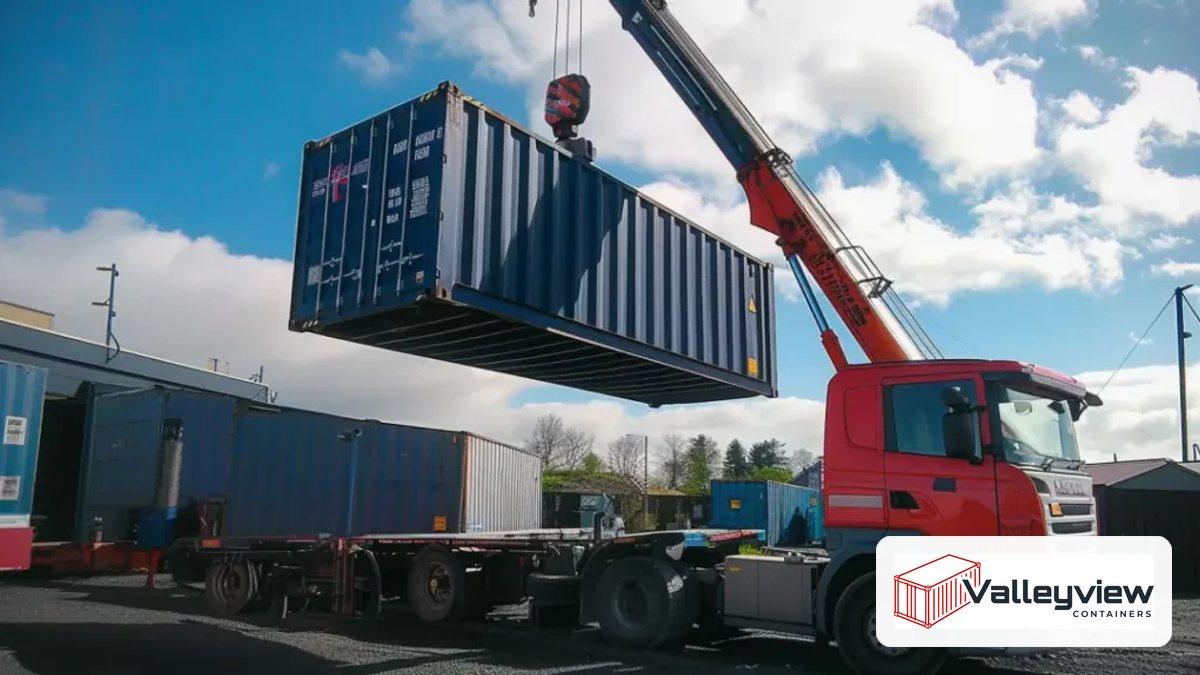
Short answer: in most of British Columbia you do not need a building permit to set a container on your property for storage, but you almost always have to satisfy your local zoning bylaw. Zoning is what decides whether a container is allowed on your lot at all, how far it has to sit from each property line, and in some communities whether it has to be screened from the street. The moment the container stops being storage and becomes a space people work or live in, it is a building, and a building permit and the BC Building Code come with it.
There is no province-wide container rule to look up. Authority sits with your municipality, or with your regional district if the property is outside city limits, and the answer genuinely differs between a lot in Kamloops, an acreage in the Cariboo, and a residential property in Metro Vancouver. We deliver containers across BC every week and we hear how these conversations go, but we are not the permit office. What follows is the map of what gets checked, so the call you make before delivery day covers everything that matters.
Zoning is what catches most people
Most bylaws treat a storage container as an accessory structure or accessory building, the same category as a shed or a detached garage. Some newer bylaws name shipping containers specifically, with their own clause. Either way, the zoning bylaw is where the real constraints live, and they are usually these:
- Whether your zone permits it. Rural, agricultural, and industrial zones are generally the permissive ones. Restrictions concentrate in residential zones, where a few BC municipalities limit containers to temporary construction use or prohibit them outright.
- Setbacks. A minimum distance from the front, side, and rear property lines, and often from a septic field, a well, or a watercourse. Setbacks are the single most common reason a container has to be moved after it lands.
- Lot coverage and accessory building area. A 40 ft container adds roughly 320 square feet of footprint. If you already have a shop and a shed, that may be what pushes the property over its cap.
- Siting and appearance. Front yard placement is commonly prohibited. Some bylaws ask for fencing or landscape screening, and a few specify a painted or neutral finish rather than bare weathered steel.
Storage, temporary, occupied: three different conversations
How you intend to use the container matters more than the container itself. These are the situations we see, and how they are usually handled in BC.
| How you are using it | Usually treated as | What to expect |
|---|---|---|
| Storage on a rural acreage or farm | Accessory structure under the regional district bylaw | Siting and setback rules; often no building permit |
| Storage in a city residential yard | Accessory structure, most closely regulated case | Zoning check first; screening or a permit in some communities |
| Storage in a commercial or industrial yard | Normally a permitted use | Setbacks plus fire access lanes and sightlines |
| Temporary on an active job site | Construction facility tied to the project | Often covered by the project permit, with a time limit |
| Converted to an office, shop, or dwelling | A building | Building permit, drawings, BC Building Code, trade permits |
That last row is the one that surprises people. A container you heat, wire, and work in is not storage any more, and the review that follows looks like the review for any small building: stamped drawings, foundation and anchoring details, electrical and plumbing permits, and an inspection at the end. It is entirely doable, and plenty of BC businesses have done it. It is simply a different project than dropping a sea can on a gravel pad.
Five questions to ask before you order
Call the planning or building department for the municipality or regional district your property sits in. Give them your address, say what you intend to put there, and work through this list.
- What zone is my property in, and are shipping containers or accessory structures permitted in it?
- What are the setbacks from each property line, and from any septic field, well, or watercourse?
- Does it count toward lot coverage or a maximum accessory building area, and does adding it put me over?
- Do you require a permit, a siting plan, screening, or a finish colour, and is there a time limit on how long it can stay?
- Is anything else registered on this property — Agricultural Land Reserve, floodplain, a development permit area, a strata, or a covenant on title?
Note the name of the person who answered and the date. If the answer is that no permit is needed, ask for it by email. That one line of writing has settled more than one neighbour complaint.
The BC wrinkles worth knowing
Agricultural Land Reserve. A great deal of BC farmland is in the ALR. Using a container to store feed, tools, or equipment as part of a working farm is generally the straightforward case, but non-farm uses on ALR land are a separate approval through the Agricultural Land Commission, on top of whatever your regional district requires. If your property is in the ALR, say so on the first call — it changes which office you are dealing with. We deliver to working farms and ranches throughout the Cariboo and the Interior, and the ALR question comes up on most of those sites.
Strata bylaws and covenants on title. On strata property and in many newer subdivisions, a building scheme or covenant registered on title can be stricter than the city bylaw, and it is enforced by the strata or the neighbours rather than the municipality. Check your title and your strata bylaws before you assume a municipal yes is the whole answer.
Floodplain, riparian, and development permit areas. Riverfront, lakefront, and coastal lots frequently carry an elevation requirement or a setback from the top of bank. Development permit areas can add a form and character review, which is where screening and finish requirements tend to appear.
Foundations, anchoring, and when a box becomes a structure
For plain storage, most authorities in BC do not ask for an engineered foundation. The standard approach is a level, compacted gravel pad, or timber or concrete blocks under the four corner castings, which keeps the steel frame out of the mud and keeps the doors square. That is a placement decision more than a regulatory one, and our BC delivery guide walks through the site prep a tilt deck truck needs.
Once a container is treated as a building, the ground work changes. Expect footings, anchoring designed for wind and seismic loads, snow load review if you add a roof or stack units, and drawings from a BC professional. Three things in particular push a container across that line: stacking, adding a roof or lean-to structure, and cutting large openings. Cutting removes structural steel, and reframing it properly is part of what we handle in our container modification work.
Make the call before you book the truck
The cheapest permit conversation is the one you have before delivery day. If a bylaw officer asks you to relocate a container after it lands, you pay for a second delivery, a second crane or tilt deck, and a second pad. Ten minutes on the phone protects all of it.
Placing a container in BC
In practice the rural side of the province is the easy case. A container behind a shop on a Cariboo acreage or a ranch outside Prince George usually needs nothing more than sensible setbacks. Serviced residential lots in the Okanagan and the Lower Mainland are where the bylaws bite hardest, so if you are placing one in Kelowna or a Metro Vancouver neighbourhood, check first and site it in a rear yard where you can.
Once you know what your property allows, the rest is choosing the unit. Size drives the footprint your setbacks have to accommodate, and our 20 ft versus 40 ft comparison is the fastest way to settle that. From there, look at what is on the ground today in our current inventory, or ask us about lease to own if you would rather spread the cost.
Custom Solutions
Custom container solutions, built in Kamloops
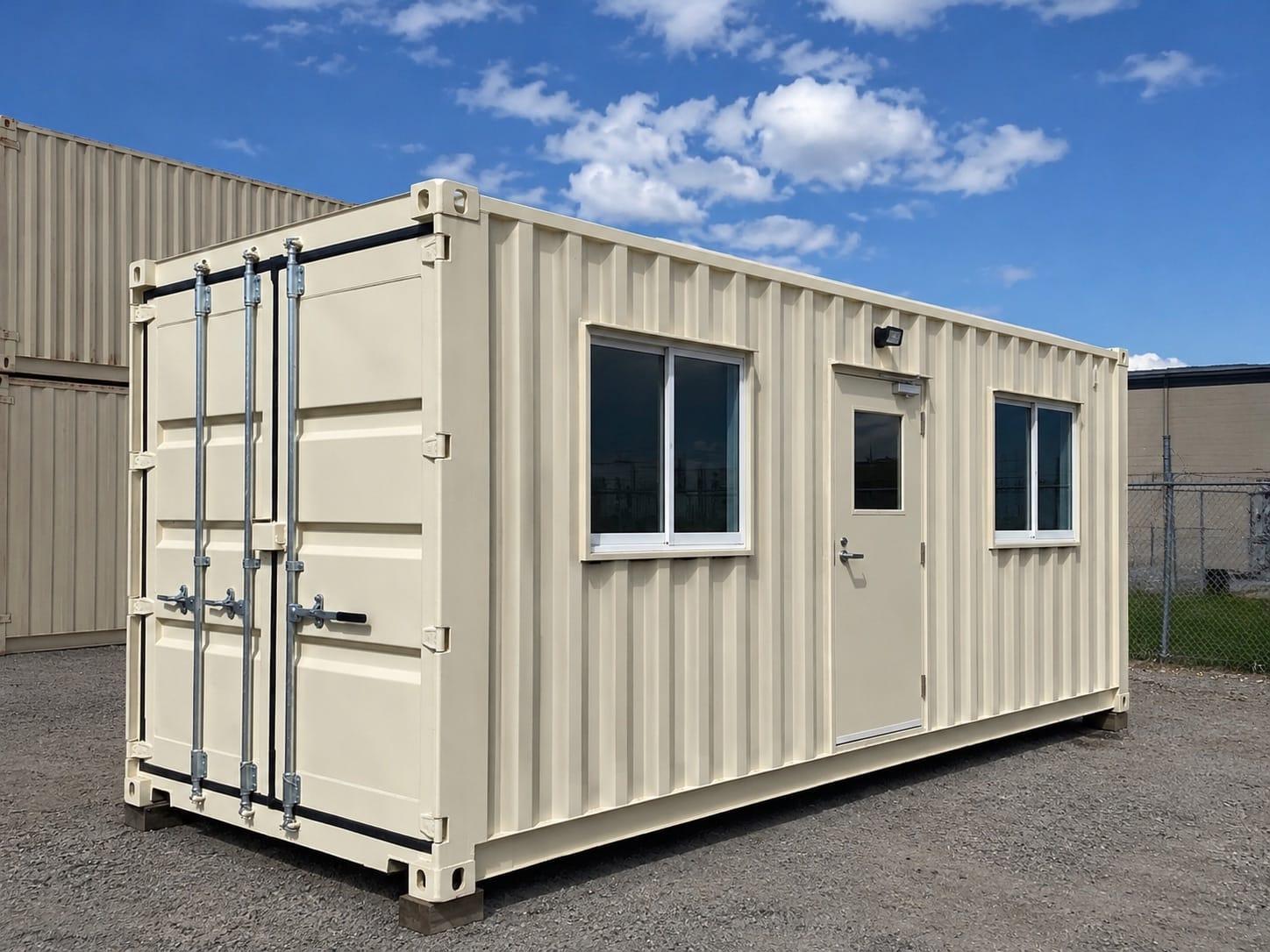
Custom containers for work and for living: site offices, workshops, farm storage, cold storage, pop-up shops, bunkies and turnkey container homes — designed around your project, built in our own yard and delivered anywhere in BC. Insulated site offices from $12,350 CAD; bunkies and modular homes are quoted per project.