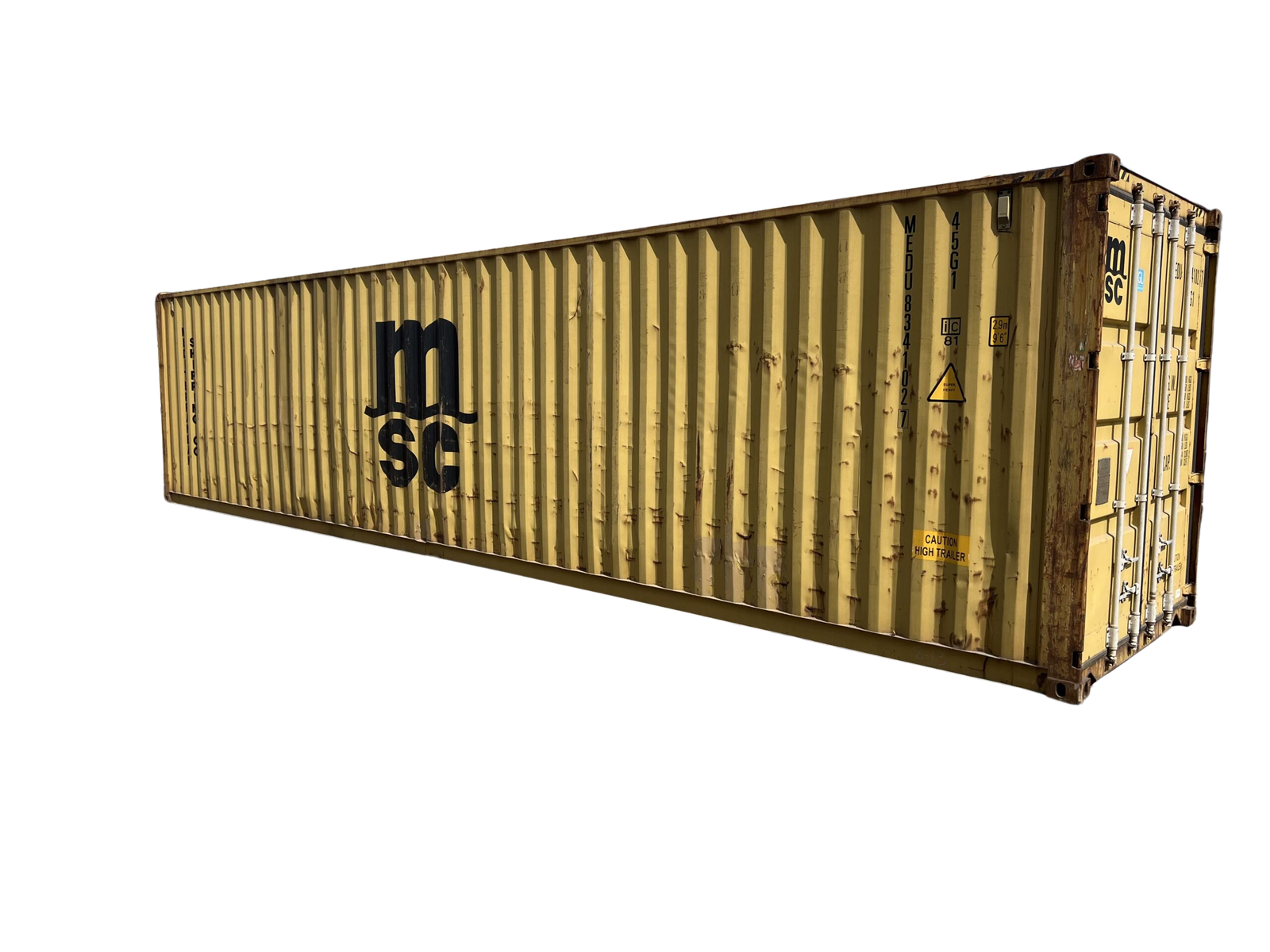

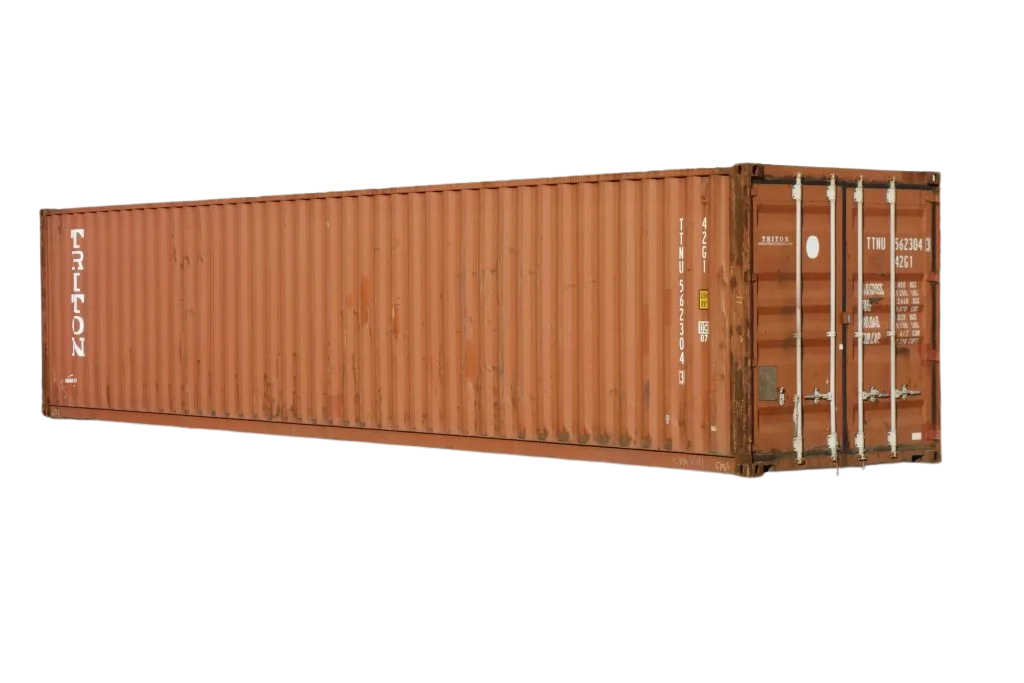
 Used (cargo-worthy)
40' Used Container
40ft · Used (cargo-worthy) · Delivered across BC
A used (cargo-worthy) 40ft container gives you the full 40-foot footprint — about 2,390 cubic feet — at a fraction of new pricing. In BC it runs $3,000–$3,300 CAD plus tax and delivery. Inspected, structurally sound, and wind- and watertight, it's the most cost-effective way to get large-volume secure storage on your site.
- Inspected & certified
- Wind & watertight
- Cost-effective
- Large capacity
Specifications
- Size
- 40ft
- Condition
- Used (cargo-worthy)
- External dimensions
- 40' × 8' × 8'6"
- Internal volume
- ~2,390 cu ft
- Maximum payload
- 28,600 kg
- Price (CAD)
- $3,300–$3,600 + tax & delivery
Design it in 3D. Take a 10ft, 20ft or 40ft high cube into the Container Studio — position the doors and windows, pick framing and insulation, and watch the estimate build from the same catalogue this page prices from.
Container StudioWhat people use it for
Common applications for the 40' used container across Interior & Northern BC.
- Large-volume budget storage
- Farm, ranch & acreage use
- Construction & industrial sites
- Bulk equipment storage
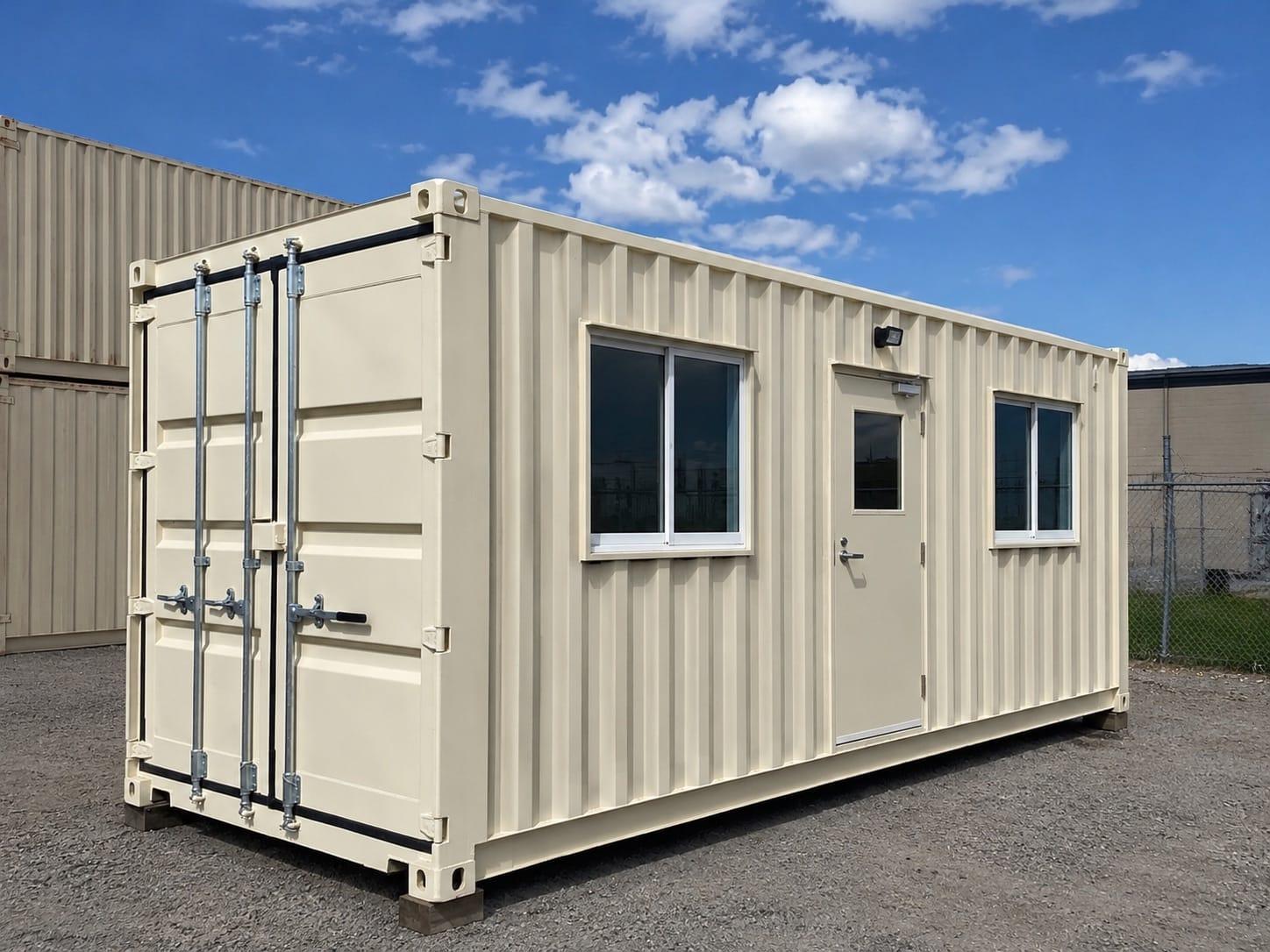
Custom Solutions
Custom container solutions, built in Kamloops
Custom containers for work and for living: site offices, workshops, farm storage, cold storage, pop-up shops, bunkies and turnkey container homes — designed around your project, built in our own yard and delivered anywhere in BC. Insulated site offices from $14,600 CAD; bunkies and modular homes are quoted per project.
40' Used Container — frequently asked questions
About the 40' Used Container
How much can a 40ft container hold?
A standard 40ft container holds roughly 2,390 cubic feet — about the contents of a three- to four-bedroom house, or a large volume of palletized goods and equipment.
How much does a used 40ft container cost in BC?
The used 40ft container is listed at $3,300–$3,600 in Canadian dollars, plus tax and delivery. Where a unit falls in that range depends on its condition and where it’s sourced. Delivery is quoted for your site by distance and access, and your quote shows the container and delivery together before you commit.
What are the inside and outside dimensions of the used 40ft container?
Outside, it’s 40ft long, 8ft wide and 8ft 6in tall. Inside, it measures about 39ft 5in long, 7ft 8in wide and 7ft 10in high, for roughly 2,390 cubic feet, and the door opening is about 7ft 5in high. It covers 320 square feet of ground, with roughly 300 square feet of usable floor inside.
How much weight can the used 40ft container carry?
Valleyview’s catalogue lists a maximum payload of 28,600 kg for the used 40ft container. That’s a catalogue figure for this type of container, not the rating of a specific unit, so mention any unusually heavy or concentrated load when you ask for a quote. The floor is plywood or bamboo over steel cross-members, and it carries things like pallet racking, a welder, a quad or a pallet jack.
What condition will my used 40ft container be in?
It will show a working life: expect surface rust, dents and faded paint, but no holes, no soft floor and doors that seal. It’s listed as cargo-worthy, meaning it has been inspected and judged structurally sound and watertight enough to carry cargo by sea. Valleyview gives an accurate condition description for each unit, so ask for the notes and any photos of the one you’re quoted, and look closely at the corners, bottom rails and roof.
Will the used 40ft container keep rain and snow out?
Yes, that’s what it’s inspected for: every container is checked for wind and watertight condition before it leaves the yard, including no daylight through the walls or roof and intact door seals. Watertight doesn’t mean the inside stays dry in every season, because condensation can form on the steel when temperatures swing; vents, desiccants or insulation help. Setting it on level, well-drained ground and treating surface rust keeps the doors sealing and the steel sound.
Does the used 40ft container come with a warranty?
No. Used containers are sold as-is, without a warranty except as required by law, and normal wear from a working life is expected. Each one is inspected before sale and given an accurate condition description, so read it before you commit. Check the unit on delivery and note any damage on the receipt, and if you later find a defect that wasn’t disclosed, contact Valleyview right away to discuss a resolution.
Should I get a used 40ft or a used 20ft container?
Get the 40ft if you need the space and your site has room for it, because a 40ft needs more room to deliver and place; get the 20ft for tighter lots, narrow access or storage you may move later, since it’s easier and cheaper to move. The used 40ft holds about 2,390 cubic feet to the used 20ft’s 1,170, and is listed at $3,300–$3,600 against $2,500–$3,000, both plus tax and delivery.
See the used 20ftShould I get the standard-height used 40ft or a used 40ft high cube?
Get the high cube if you’ll stack pallets two high, store tall equipment, build tall shelving, insulate it or work standing inside. The standard height suits low items such as totes, tools, tires and furniture, and sites with tight overhead clearance. The used high cube is listed at $3,500–$4,000 and this standard-height unit at $3,300–$3,600, both plus tax and delivery, and the high cube holds about 2,690 cubic feet to 2,390 on the same footprint.
How is the used 40ft container delivered, and how much room does the truck need?
Most deliveries use a tilt-deck truck, with the container sliding off the back onto your prepared spot. A 40ft needs at least 110 feet of straight, clear length, including where it will sit, and more overhead room than a 20ft’s 16 feet while the deck tilts, so ask for the height your site needs when you book. The truck can’t turn while unloading, so send photos of the route and the drop spot.
What should the used 40ft container sit on?
Firm, level, well-drained ground: a compacted gravel pad, asphalt or concrete, with blocks or railway ties under the four corner castings to lift the steel and let air move underneath. Set the corners level with each other before delivery day, because a container on uneven ground twists and its doors bind. On a 40ft the corners sit about 40 feet apart, so check the whole length for soft or low spots. Leave room in front of the doors to swing them fully open and load.
Can the used 40ft container be insulated or converted?
It can, but if people will work or live in it once it’s insulated, Valleyview’s advice is to choose a high cube: a standard 40ft is about 7ft 10in high inside, and insulation, strapping and a ceiling take six inches or more of that. For storage, it works as delivered. Ask about items such as a steel door, sliding windows or a welded lock box, each quoted line by line before any steel is cut.
What is the used 40ft container used for?
Valleyview lists it for large-volume budget storage; farm, ranch and acreage use; construction and industrial sites; and bulk equipment storage. Everything goes in and out through the cargo doors at one end, so put what you need least at the far end and keep a clear aisle to it.
Can I see the used 40ft container I’m buying before I order?
For units in Valleyview’s Kamloops yard, yes. The inventory page lists only containers physically in the yard, each with a photo where available, its recorded condition and its unit number when legible, and you can see them in person at D3-1764 Kelly Douglas Rd, open seven days a week from 10:00 AM to 6:00 PM. If none is listed, Valleyview sources from partner depots across Canada, so ask what photos and condition details come with your quote.
See the yard inventoryCan I get the used 40ft container on lease-to-own?
Lease-to-own is offered on 20ft and 40ft storage containers such as this one, and your quote confirms whether the unit you choose qualifies. You make monthly payments toward ownership, with the payment, term and delivery quoted together up front, and you can pay out the balance early whenever you like. The monthly amount depends on the container’s size, condition and delivery location. Valleyview doesn’t rent containers; lease-to-own is its only financing option.
How lease-to-own worksSizes & specs
Are new 40ft containers standard height or high cube?
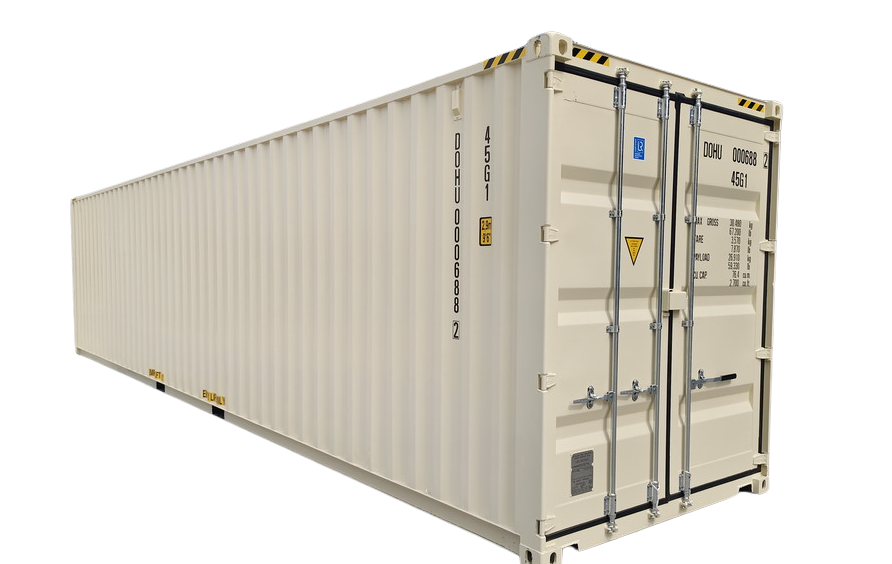
In Valleyview’s catalogue, every new 40ft container is a high cube, 9ft 6in tall, including the 40ft high cube with side doors. A standard-height 40ft at 8ft 6in is listed as a used, cargo-worthy unit, and a used 40ft high cube is listed as well. All four share the same 40ft by 8ft footprint, so the choice comes down to headroom, condition and budget.
What size container works for tractors and farm equipment?
For tractors and other tall machinery, look at a 40ft high cube first, because the door opening decides what drives in: about 8ft 5in on a high cube against about 7ft 5in on a standard container. Measure the tallest point and add six inches, and check the width, including mirrors and any loader, against the interior width of about 7ft 8in. For feed, tools and parts, the catalogue lists used 20ft and 40ft standard containers for farm and acreage storage.
New & used containers
How do I check a container’s door seals before I buy it?
The doors should swing freely, latch firmly and press evenly against the rubber gaskets all the way round, and any daylight around a closed door means water can get in. Look along the gaskets for cracks or tears, and check that the hinges turn without grinding. Valleyview checks that door seals are intact before sale, so if a seal or door on a specific unit worries you, raise it before you commit.
Should I buy a new or used container for storage?
For most storage, a used cargo-worthy container makes sense: it is inspected, wind and watertight and costs less than new, and cosmetic wear doesn’t affect what you keep inside. A useful rule is to buy the lowest grade that still keeps your contents dry. Choose new when looks matter, such as a customer-facing business or a branded unit, or when you want minimal rust from the start.
Compare containersPrices
What does a new 40ft high cube container cost?
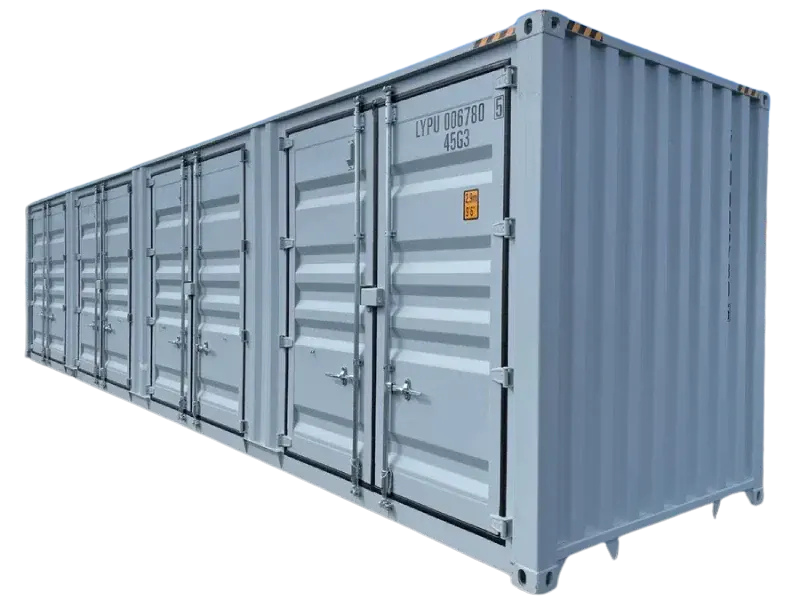
A new one-trip 40ft high cube is listed at $6,200–$7,100 plus tax and delivery. It’s a foot taller than a standard container and holds about 2,690 cubic feet, with clean factory paint and a manufacturer’s warranty. If you also want full-length side access, the new 40ft high cube side-door container is listed at $9,000–$10,000. A high cube rides about a foot higher on the delivery truck, so check overhead clearance along the route to your drop spot.
How much does a 10ft shipping container cost?
A 10ft container is listed at $5,000–$5,500 plus tax and delivery. It has about half the footprint of a 20ft, for tight lots and small sites where a 20ft won’t fit. Smaller doesn’t mean lower-priced here: a new one-trip 20ft is listed at $3,700–$4,200, so if your site can take a 20ft, compare both. Because 10ft units are made by cutting and re-ending standard containers, they’re less common, so call (778) 694-4050 to confirm current availability before you plan around one.
Buying & paying
Do I need to pay a deposit when I order a container?
A deposit may be required to secure your order. The amount isn’t published on the website; it’s set out with your quote and invoice, along with the rest of the payment terms. Ask about the deposit when you receive your quote so you know what’s needed to confirm the order and how the remaining balance will be handled.
Delivery
What should I check when my container arrives?
Check the doors, the floor and the overall condition before you sign. Make sure both doors swing and lock cleanly, look for soft spots in the floor, and stand inside with the doors shut to look for pinholes of daylight along the roof and door seals. Under Valleyview’s terms, any damage or discrepancy has to be noted on the delivery receipt at the time of delivery.
Preparing your site
Can I put a shipping container on a sloped lot?
It can work if the spot under the container is made level and the truck can still reach it. A container sitting on a slope twists and its doors bind, so a sloped site needs a level gravel pad, or supports set level with each other under the corners, before delivery. The truck also needs firm, level ground along its straight run to the drop spot. Send Valleyview photos before you book so the site can be checked and the drop planned.
Owning a container
How should I clean a shipping container?
Wash the outside once a year with a simple soap and water solution to remove dirt, salt near the coast and other corrosive grime, and clear leaves and debris off the roof. Inside, sweep the floor and let it dry before you load it. Never dry-sand the floor: the plywood is treated against insects and fungus at the factory, and sanding turns that treatment into airborne dust.
Permits & bylaws
What happens if a container has to be moved because of a bylaw?
You pay to move it, which can mean a second delivery and a second pad. That is why the zoning and permit check belongs before delivery day, not after. Confirm the zone, setbacks and any permit with your local government, choose the spot to match, and then book delivery.
Custom builds
How do I save a video of my Container Studio design?
Use the tour on the review step. It is a 30-second film of the build you configured, in five chapters, and once your contact details are entered you can save it as a 1920×1080 MP4 or WebM file, depending on your browser. Keep the tab visible while it records. If your browser can’t record video, the studio says export is unavailable and the tour still plays on screen.
Business & lease-to-own
How is a fleet or bulk container order priced?
Per unit, with pricing that improves as the quantity goes up and no fixed minimum to qualify. Tell Valleyview how many containers you need, the sizes and condition, and where each one is going, and the quote shows the per-unit price for that order size, with delivery itemized line by line. Branding, paint or modifications for the whole order can be quoted on the same document.
Bulk container salesRefrigerated containers
Who connects the power when a reefer is delivered?
Your electrician does. Valleyview sets the reefer down by tilt-deck on your pad, and a qualified electrician installs the proper outlet and wiring and makes the final connection. Line up the electrician before delivery day so the outlet is ready where the unit will sit. Once the unit is running, let it bring the box down to your set temperature before you load anything.
Uses
Can a shipping container work as a garden shed on a small lot?
Yes. A 10ft takes about half the footprint of a 20ft, which suits tight residential lots and garden storage, but it’s sold new only and in limited supply, so confirm availability before you plan around it. A 20ft gives room for shelving with space to turn around. Leave clear space in front of the doors for them to swing, and check setbacks and size limits with your municipality or regional district before ordering.
Still have a question? Call (778) 694-4050 or see the full FAQ.