
 HIGH CUBE · SIDE DOOR
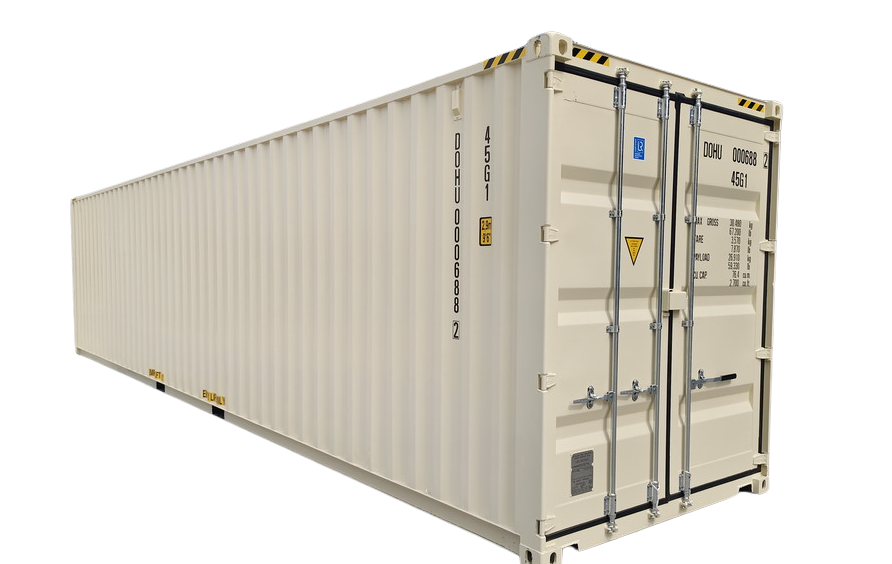
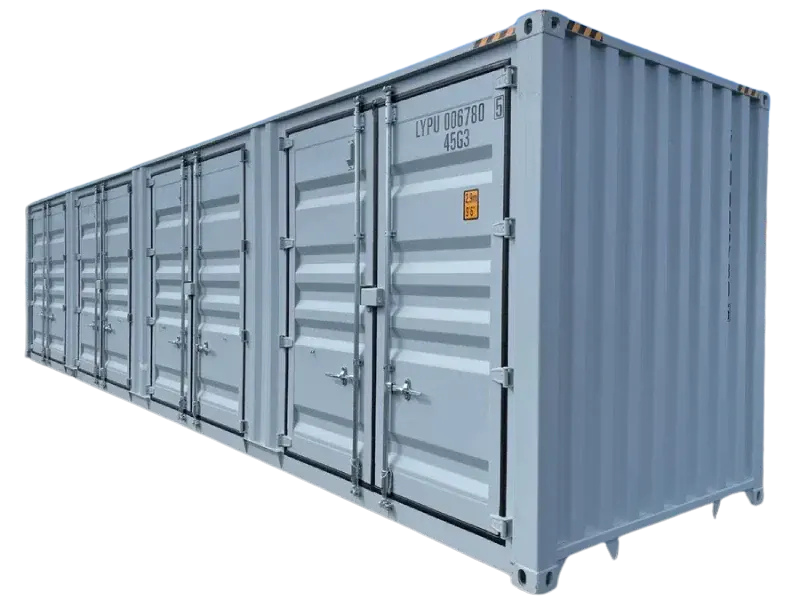
40' New High Cube Side Door
40ft · New (one-trip) · Delivered across BC
A new 40ft high-cube side-door container combines maximum volume (~2,690 cubic feet, 9'6" tall) with full-length side access. In BC it runs $10,000–$12,000 CAD plus tax and delivery. It's the most versatile unit we sell — built for active, high-access storage, large workshops, and ambitious container conversions where both space and easy entry matter.
- Side-door access
- Extra height (9'6")
- One-trip condition
- Structural warranty
Specifications
- Size
- 40ft
- Condition
- New (one-trip)
- External dimensions
- 40' × 8' × 9'6"
- Internal volume
- ~2,690 cu ft
- Maximum payload
- 28,600 kg
- Price (CAD)
- $9,000–$10,000 + tax & delivery
Design it in 3D. Take a 10ft, 20ft or 40ft high cube into the Container Studio — position the doors and windows, pick framing and insulation, and watch the estimate build from the same catalogue this page prices from.
Container StudioWhat people use it for
Common applications for the 40' new high cube side door across Interior & Northern BC.
- High-access warehouse overflow
- Large workshops & shops
- Premium container conversions
- Equipment requiring side loading
Custom Solutions
Custom container solutions, built in Kamloops
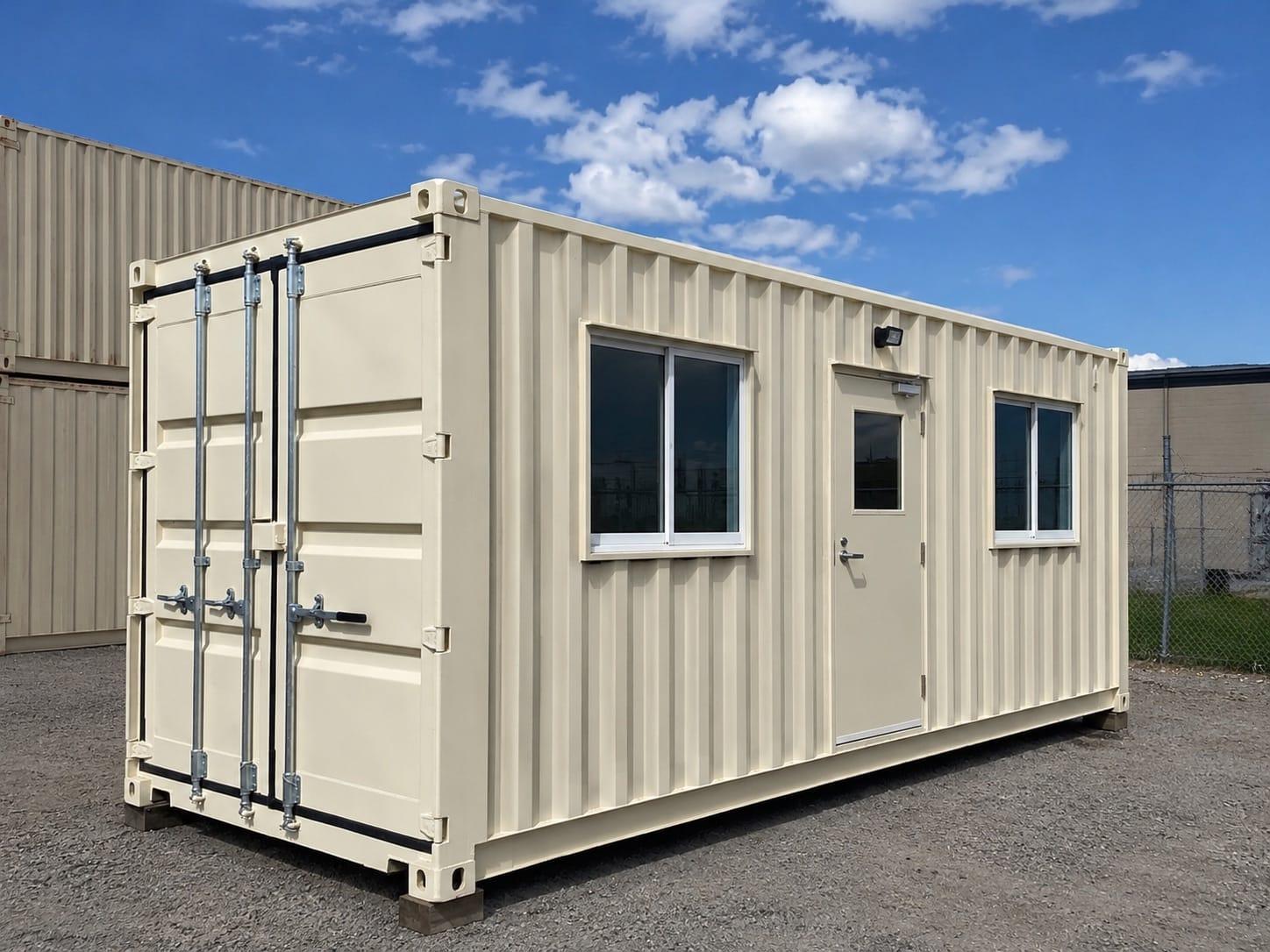
Custom containers for work and for living: site offices, workshops, farm storage, cold storage, pop-up shops, bunkies and turnkey container homes — designed around your project, built in our own yard and delivered anywhere in BC. Insulated site offices from $14,600 CAD; bunkies and modular homes are quoted per project.
40' New High Cube Side Door — frequently asked questions
About the 40' New High Cube Side Door
Is a side-door 40ft worth the premium?
If you load and unload often, it can be — full-length side access removes the climb-over problem of end doors, and it pairs with high-cube height.
How much does a new 40ft high cube side-door container cost in BC?
The new 40ft high cube side-door container is listed at $9,000–$10,000 in Canadian dollars, plus tax and delivery. Where a unit falls in that range depends on the unit and where it’s sourced. A regular new 40ft high cube, with cargo doors at one end only, is listed at $6,200–$7,100, also plus tax and delivery. Delivery is quoted for your site by distance and access, and your quote shows the container and delivery together before you commit.
What are the inside and outside dimensions of the new 40ft high cube side-door container?
Outside, it’s 40ft long, 8ft wide and 9ft 6in tall, the same as a regular 40ft high cube, and it covers 320 square feet of ground. The catalogue lists the same internal volume as a regular 40ft high cube, roughly 2,690 cubic feet; a regular 40ft high cube measures about 39ft 5in long, 7ft 8in wide and 8ft 10in high inside. Ask Valleyview to confirm the inside measurements and door openings of the unit you’re quoted.
How much weight can the new 40ft high cube side-door container carry?
Valleyview’s catalogue lists a maximum payload of 28,600 kg for the new 40ft high cube side-door container. That’s a catalogue figure for this type of container, not the rating of a specific unit, so mention any unusually heavy or concentrated load when you ask for a quote. The floor is plywood or bamboo over steel cross-members, and it carries things like pallet racking, a welder, a quad or a pallet jack.
Is the new 40ft high cube side-door container a one-trip unit?
Yes. Valleyview lists it as new (one-trip): built overseas, loaded once for a single voyage to North America, then sold. Expect straight walls, intact factory paint, tight door seals and an unstained floor, without the rust and dents of a working life. That suits a site where looks matter, such as a customer-facing business.
Does the new 40ft high cube side-door container come with a warranty?
Yes. As a new one-trip container, it comes with a manufacturer’s warranty for structural integrity and watertight condition. Valleyview doesn’t publish its length or claim process on the website, so ask for the warranty details on the unit you’re quoted and keep them with your invoice. Inspect the container when it arrives and note any damage on the delivery receipt before you sign.
Is there a 20ft version of the side-door container?
Yes. The new 20ft side-door container has the same full-length side access in a 20ft size, about 1,170 cubic feet and 8ft 6in tall outside, against about 2,690 cubic feet and 9ft 6in for this 40ft high cube. It’s listed at $6,600–$9,000, against $9,000–$10,000 for the 40ft, both plus tax and delivery. A 20ft needs less room to deliver and place, which helps on tighter sites.
See the side-door 20ftWhat colour does the new 40ft high cube side-door container come in?
Valleyview confirms the colours available for this model with your quote; factory RAL colour options and colour-based pricing are only published for the standard new 20ft. If you need a particular colour, the container can be painted in a RAL colour you choose at the Kamloops yard before delivery, quoted per design, which is easier than painting it on site.
How is the new 40ft high cube side-door container delivered, and how much room does the truck need?
Most deliveries use a tilt-deck truck, with the container sliding off the back onto your prepared spot. A 40ft needs at least 110 feet of straight, clear length, including where it will sit, and more overhead room than a 20ft’s 16 feet while the deck tilts, so ask for the height your site needs when you book. A high cube also rides about a foot higher on the truck, so check tree limbs, hydro lines and carports along the route. Say which way the side opening should face when you book.
What should the new 40ft high cube side-door container sit on?
Firm, level, well-drained ground: a compacted gravel pad, asphalt or concrete, with blocks or railway ties under the four corner castings to lift the steel and let air move underneath. Set the corners level with each other before delivery day, because a container on uneven ground twists and its doors bind. On a 40ft the corners sit about 40 feet apart, so check the whole length for soft or low spots. Leave clear, level ground along the side that opens so the doors can swing fully open.
Can the new 40ft high cube side-door container be modified?
Ask first: no published build package starts from a side-door unit, and the Container Studio models containers with cargo doors at one end, so work on a side-door unit is quoted for your design. Tell Valleyview what you’re planning, such as shelving along the open side, a workshop or a retail counter, and items from the modification menu can be discussed, with fitment and price confirmed in an itemized quote before any steel is cut.
What is the new 40ft high cube side-door container used for?
Valleyview lists it for high-access warehouse overflow, large workshops and shops, container conversions, and equipment requiring side loading. Plan shelving or benches along the wall opposite the side doors, since the whole length can be reached once the side is open.
Can I see the new 40ft high cube side-door container I’m buying before I order?
For units in Valleyview’s Kamloops yard, yes. The inventory page lists only containers physically in the yard, each with a photo where available, its recorded condition and its unit number when legible, and you can see them in person at D3-1764 Kelly Douglas Rd, open seven days a week from 10:00 AM to 6:00 PM. If none is listed, Valleyview sources from partner depots across Canada, so ask what photos and condition details come with your quote.
See the yard inventoryCan I get the new 40ft high cube side-door container on lease-to-own?
Lease-to-own is offered on 20ft and 40ft containers, and your quote confirms whether this model qualifies. You make monthly payments toward ownership, with the payment, term and delivery quoted together up front, and you can pay out the balance early whenever you like. The monthly amount depends on the container’s size, condition and delivery location. Valleyview doesn’t rent containers; lease-to-own is its only financing option.
How lease-to-own worksSizes & specs
How do I measure my site for a shipping container?
Start with the footprint: mark a rectangle 8ft wide and as long as the container, plus clear space at the door end to swing the doors open and load. Check the spot is level, firm and drains well. For a 20ft, the truck needs about 72 feet of straight, clear length ending at the container’s final spot, at least 10 to 12 feet of width and 16 feet of overhead clearance; a 40ft needs at least 110 feet and more overhead room, so ask for the height your site needs. Photos of the spot and approach help Valleyview advise before you order.
Watch the delivery guideWhat is a double-door (tunnel) container used for?
A double-door or tunnel container has full cargo doors at both ends, so you can load and unload from either end without climbing over stored items to reach the back. It suits storage you get into often, such as high-turnover inventory, drive-through or pass-through layouts, long items loaded from both ends, and job-site staging. In Valleyview’s catalogue it is a new 20ft unit with the same outside size as a standard 20ft.
See the double-door 20ftNew & used containers
What do the grades “WWT” and “as-is” mean when comparing containers?
They are trade grades below cargo-worthy. WWT is a unit that is still wind and watertight but not certified for ocean shipping, and it usually shows more cosmetic wear. As-is means sold without any weather-tight promise; it may have a pinhole leak, a patched repair or a sticky door, so inspect it in person. Valleyview’s catalogue grades are new and used cargo-worthy, so ask what any other grade term on a quote or listing means.
Should I buy a new or used container for storage?
For most storage, a used cargo-worthy container makes sense: it is inspected, wind and watertight and costs less than new, and cosmetic wear doesn’t affect what you keep inside. A useful rule is to buy the lowest grade that still keeps your contents dry. Choose new when looks matter, such as a customer-facing business or a branded unit, or when you want minimal rust from the start.
Compare containersPrices
How much more does a new 20ft container cost than a used one?
A new one-trip 20ft is listed at $3,700–$4,200 and a used cargo-worthy 20ft at $2,500–$3,000, a difference of $1,200 at the low end of each range, before tax and delivery. Both hold about 1,170 cubic feet. The extra buys factory paint in a choice of RAL colours, minimal wear and a manufacturer’s warranty. The used unit shows surface rust and dents and is sold without a warranty except as required by law, but it’s inspected and wind and watertight before it’s sold.
Container condition gradesHow much does a refrigerated shipping container cost?
The 20ft refrigerated container, or reefer, is listed at $27,000–$30,000 plus tax and delivery. It has insulated walls and a working refrigeration unit for cold or frozen storage. It needs 3-phase power on site, typically 460V, so also plan for a qualified electrician to install the outlet and wiring, or a diesel generator on an off-grid site. Confirm your electrical service before ordering; Valleyview can advise on the requirements.
Refrigerated container guideBuying & paying
I’m not sure which container I need. Can you help me choose before I order?
Yes. Tell Valleyview what you plan to store or build, how much space you have on site and your budget, and you’ll get a recommended size and condition. Choosing “Not Sure” as the container type on the quote form is fine. Before you call, measure the spot and your largest items, and walk the route the delivery truck would take, so the advice fits your site.
Delivery
Can I pick up a container from the yard myself?
Ask first, because customer pickup isn’t a published option. Valleyview delivers by tilt-deck truck, so call (778) 694-4050 to ask whether collecting the unit you want is possible and what loading it would involve. If delivery suits you better, the delivery quote is free and is priced to the site the container is actually going to.
Can I choose which way the container doors face when it’s delivered?
Usually, within what the truck can reach. Decide before delivery day which way you want the doors to face, include it with your site details when you ask for a quote, and confirm the exact placement and orientation with the driver on arrival. The truck backs in on a straight line and can’t turn while the container comes off, so the spot and the door direction have to suit that approach. If you’re unsure, send photos of the spot first.
Preparing your site
Does frost heave or spring thaw affect a container’s foundation?
It can. Water that freezes and thaws in the ground can shift a pad or the blocks under a container, so start with a firm, compacted base on a spot that drains well rather than soft soil that holds water. After the ground thaws in spring, check that the container is still level and that the blocks have not cracked or shifted. A container that has moved out of level can show it at the doors, which become hard to open and close.
Container maintenance guideOwning a container
How do I protect a container on a remote or seasonal site?
Plan for the weeks nobody is there. If a site will sit unattended for a whole season, take the highest-value tools home rather than trusting any lock. Add a crossbar to the lock box and puck lock. Trim the brush around the unit and add a motion light so a thief has no cover. Keep a spare key somewhere other than the site, since a frozen or fouled lock on a remote unit means a wasted trip.
Permits & bylaws
What changes can turn a storage container into a structure that needs a building review?
Stacking containers, adding a roof or lean-to, and cutting large openings can each move a container from storage toward being reviewed as a structure. Cutting removes structural steel, so openings need proper reframing. A container treated as a structure can bring footings, anchoring designed for wind and seismic loads, and a snow load review for an added roof or stacked units. If you plan any of these, ask your local government what review applies before the work starts.
Custom builds
Can you add heating or air conditioning to a container?
Yes, starting with an HVAC pre-wire from the modification menu: a dedicated circuit and wall penetration for a mini-split or rooftop unit. The mini-split or HVAC unit itself, baseboard heaters and extractor fans are quoted per design, because the right choice turns on your site, your power and your spec. Plan insulation at the same time, since bare steel sweats and gets cold fast.
Business & lease-to-own
Can a contractor get storage, a site office and company branding on one order?
Yes. One itemized quote can cover plain storage units, a site office or workshop build, paint and decals, and delivery to each job site, with each item priced line by line. Branding is applied in Valleyview’s yard before delivery, so the units arrive carrying your company name, and the containers can be bought outright or on lease-to-own. Check with the property owner and the local government what’s allowed on each site.
Refrigerated containers
Is a refrigerated container food-safe?
Valleyview’s 20ft reefer has a food-safe stainless interior, and air circulates through a T-shaped floor so the temperature stays even. Whether your setup meets the rules for storing food or drink depends on what you store and who regulates your business, so check those requirements with the authority that oversees you before you buy. Valleyview can confirm exactly what the unit includes with your quote.
Uses
Can a shipping container be used as a site office?
Yes. A site office needs insulation, a lockable personnel door, window positions settled before any steel is cut, and power roughed in for your electrician to connect to a construction service, a generator or a permanent drop. A used 20ft base suits an office that moves between jobs; a new one-trip base suits a permanent office customers see. Valleyview’s insulated site office package covers the shell, and finished walls, heat and furniture are quoted per design. People work inside, so confirm permit requirements with your local government first.
Container officesStill have a question? Call (778) 694-4050 or see the full FAQ.