
Comparison
High Cube vs Standard Containers in BC
A high cube is one foot taller than a standard sea can and not one inch longer or wider. That single foot decides more than most buyers expect.
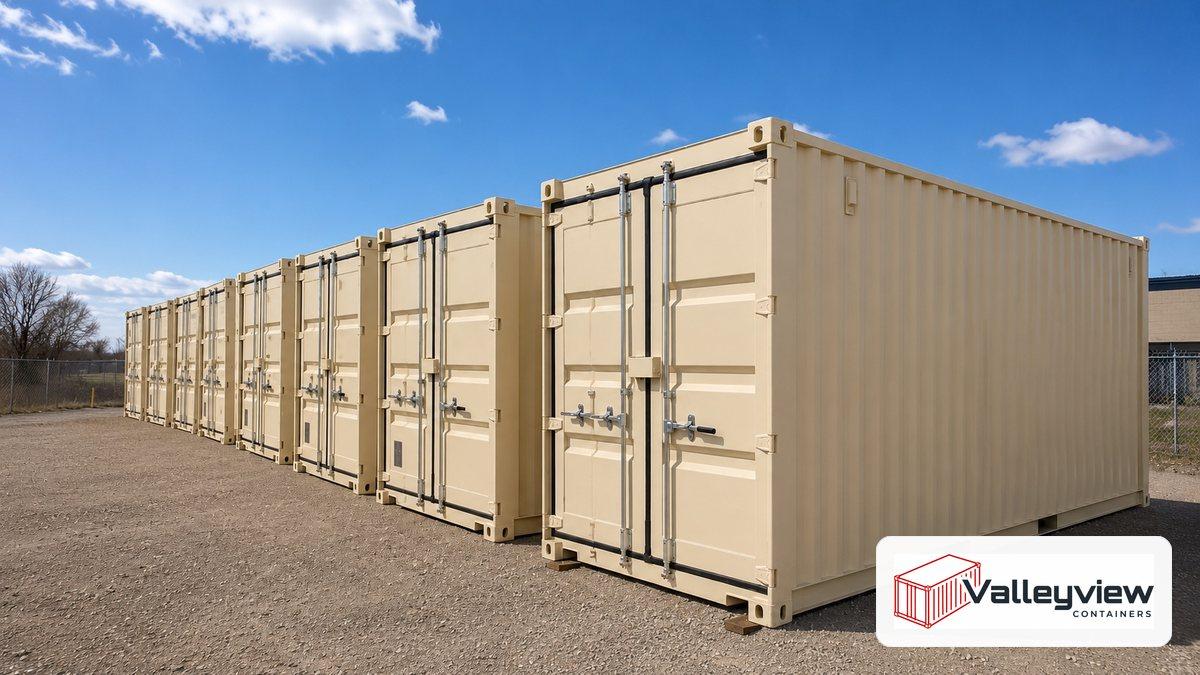
Short answer: buy the high cube if anything you are putting inside is tall, if you plan to shelve or rack the space, or if the container will ever become a workshop, office, or heated room. Buy the standard height if you are stacking bins and totes on the floor, if the container has to slide under something on your property, or if you want the lowest price for a given footprint. The extra foot costs real money and it is worth every dollar for about half the people who ask us.
We sell both heights out of our yard every week, and the confusion is understandable — a high cube looks identical in a listing photo. The name only describes height. A 40 ft high cube is still 40 ft long and 8 ft wide, sits on the same footprint, needs the same gravel pad, and stacks with the same corner castings. The only thing that changes is how much air is above your head.
The numbers that actually matter
Exterior height is the number the industry quotes, but interior height and door opening height are the two that decide whether your load fits. Here is how a 40 ft container compares in each configuration.
| Measurement | Standard (40 ft) | High cube (40 ft) |
|---|---|---|
| Exterior height | 8 ft 6 in | 9 ft 6 in |
| Interior height (approx.) | 7 ft 10 in | 8 ft 10 in |
| Door opening height (approx.) | 7 ft 5 in | 8 ft 5 in |
| Interior width | About 7 ft 8 in | About 7 ft 8 in |
| Internal volume | About 2,390 cu ft | About 2,690 cu ft |
| Footprint on your site | Identical | Identical |
That is roughly 300 extra cubic feet, or about 13 percent more space, for a footprint that costs you nothing extra in ground preparation. Put another way: the high cube is the only upgrade on a container that adds volume without adding yard space, which is why it is the default recommendation when someone is tight on room but short on storage.
Where the extra foot earns its keep
- Double-stacked pallets. A loaded pallet at a typical four-foot build height stacks two-high at roughly 8 ft. That clears a high cube ceiling comfortably and does not clear a standard one. If you are storing palletized product, this one difference can halve the number of containers you need.
- Shelving and racking. With 8 ft 10 in overhead you get a usable third shelf level, or a proper pallet rack bay, instead of wasted air. On a standard container the top shelf ends up too low to be worth building.
- Anything you insulate or finish. Insulation, strapping, and an interior ceiling can eat six inches or more of headroom. Start from 7 ft 10 in and a finished workshop feels like a basement; start from 8 ft 10 in and it feels like a room. Our guide to insulating a container in BC covers exactly how much you give up.
- Tall gear and equipment. Quads and side-by-sides on a trailer, a small tractor with the ROPS up, drilling rod, ladders and lumber stood on end, sailboat masts, greenhouse frames. The door opening is the pinch point, and one extra foot at the door is what gets the machine in without dropping the roll bar.
- Roll-up doors and man doors. If you are cutting in a roll-up, the drum and tracks steal height off the top of the opening. A high cube absorbs that loss and still leaves a usable door. See our container modification options for what fits where.
When the standard height is the better buy
Height is not free, and it is not always an advantage. There are four situations where we steer people to the standard 8 ft 6 in unit.
- Overhead clearance on your property. This is the big one. A high cube on a tilt-deck truck rides about a foot higher than a standard container, and it is the loaded height that has to clear the tree limbs on your driveway, the hydro service drop to the house, and the gate or carport at the end of it. Walk the delivery route and look up before you order — our BC delivery guide covers what the driver needs.
- You are storing low. Totes, tools, tires, seasonal gear, furniture. If nothing is going above shoulder height, you are paying for air.
- Budget per square foot of floor. When the goal is the most secured floor area for the money, a used standard container is the cheaper way to get it. Our used 40 ft standard runs in the $3,000 to $3,300 range, versus roughly $3,500 to $4,000 for the used high cube, before tax and delivery.
- Sightlines and neighbours. A 9 ft 6 in box is visibly taller from the road, which matters on a small residential lot or anywhere a setback or screening discussion is likely to come up. In some municipalities the height of an accessory structure is regulated, so it is worth a call to your local building department first.
Measure the tallest thing, then add six inches
Do not compare your load to the interior height — compare it to the door opening, which is about five inches lower on both heights. Measure your tallest item, add six inches for the forklift tines or the ramp angle, and buy the container that clears that number.
What high cube does not change
A few myths worth clearing up, because they come up on nearly every call.
It is not wider. Interior width is about 7 ft 8 in on both, so a high cube does nothing for a load that is too wide. If width is your constraint, the answer is a wider opening rather than a taller box — a side-door unit, or two containers set apart with a roof between them.
It is not weaker. High cubes are built to the same ISO standards, from the same CORTEN steel, with the same corner castings, and they stack and lift exactly like a standard unit. The corrugation is simply taller.
It does not need different ground. Same footprint, same four corner bearing points, same requirement for level, well-drained ground. A high cube is a couple hundred pounds heavier empty, which changes nothing about how you prepare the pad.
Length is a separate decision. High cube is about height; 20 ft versus 40 ft is about floor area, and the two choices are independent. If you have not settled the footprint yet, work through our 20 ft versus 40 ft comparison first, then come back to height. One practical note on that: in Canada the 40 ft high cube is by far the most common tall unit. High cube 20 ft containers exist, but they are uncommon here and usually carry a disproportionate premium, so most 20 ft units on the ground are standard height.
Choosing a height for a BC property
Geography ends up driving this more than people expect. On acreages and ranches through the Thompson-Nicola and the Cariboo, where equipment is the reason for the container in the first place, the high cube wins almost every time — there is room to deliver it, no one is worried about sightlines, and a tractor or a stacked hay wagon needs the door height. We see the same on logging and drilling operations around Prince George, where the container doubles as a shop and headroom is comfort.
In town it flips. On a serviced residential lot in Kamloops or a tight commercial yard, the standard height is often the practical answer: it slides under more obstacles, it draws less attention, and the storage is going on the floor anyway. Somewhere in the middle sit the conversion projects — shops, offices, studios, tiny builds — and those are close to unanimous. If a person is going to stand in it, buy the extra foot.
If you are still weighing it, the fastest way to decide is to see the two heights side by side. We can tell you what is on the ground today in each configuration, or you can look through our current inventory and the full product range, where the used 40 ft high cube and the used 40 ft standard sit next to each other with dimensions and pricing for both.
Custom Solutions
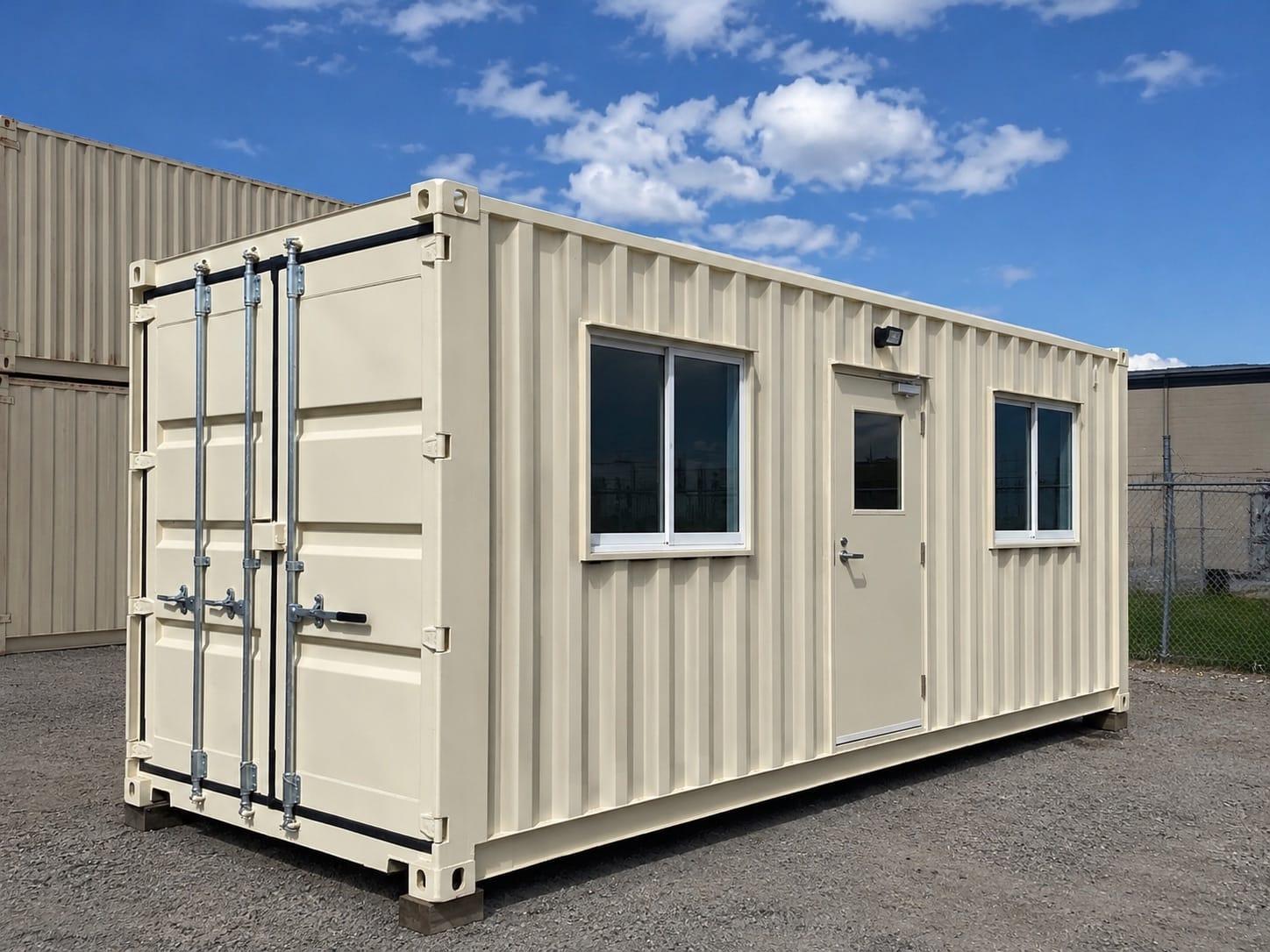
Custom container solutions, built in Kamloops
Custom containers for work and for living: site offices, workshops, farm storage, cold storage, pop-up shops, bunkies and turnkey container homes — designed around your project, built in our own yard and delivered anywhere in BC. Insulated site offices from $12,350 CAD; bunkies and modular homes are quoted per project.