
Container Security
How to Secure a Shipping Container in BC
A sea can is already the toughest storage on most BC properties. Almost every break-in happens at one spot — the doors. Here is how to close that gap.
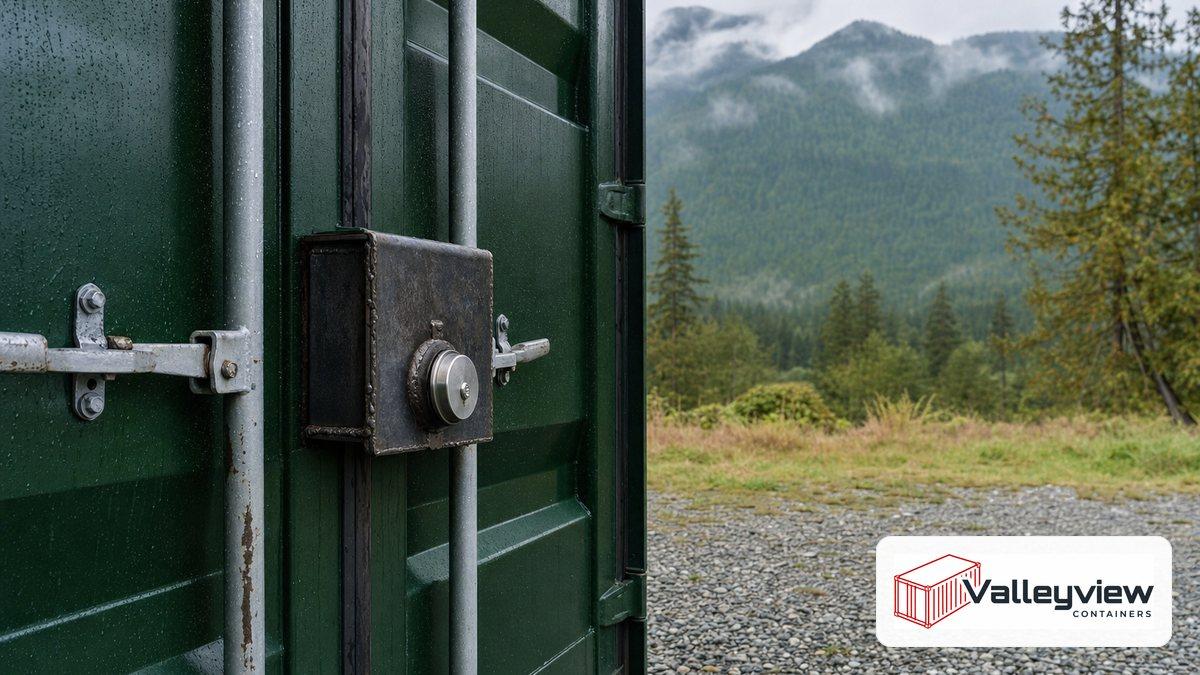
Here is the short answer: fit a welded steel lock box over a hardened puck lock, and point the doors somewhere a stranger cannot work on them unseen. That combination handles the overwhelming majority of container theft, and it costs a tiny fraction of what is usually sitting inside. The walls of a shipping container are about 2 mm of corrugated Corten steel, the roof and floor are just as unfriendly, and the hinges are welded to the frame. Nobody is cutting their way through the side of a sea can quietly. They go for the padlock, because on most containers the padlock is the only part that was never designed to resist an attack.
We deliver containers to acreages, ranches, and remote job sites all over British Columbia, and the security conversation comes up most often with contractors who have already lost a compressor or a box of cordless tools off a site. The good news is that container security is unusually cheap to get right — it is hardware and habits, not an alarm subscription.
How container doors actually lock
Understanding the door gear tells you where to spend your money. A standard container has two doors carrying four vertical locking bars — two per door. Each bar has a cam at the top and bottom that rotates into a fixed keeper welded to the frame, so when you swing the handles closed, the doors are pinned into the container at eight points. That mechanism is genuinely strong.
What holds it shut, though, is a single padlock through a hasp on one handle. Defeat that padlock and every one of those eight cams releases in about four seconds. So the entire security problem reduces to one question: how hard is it to reach and cut your lock?
The hardware that actually matters
- A lock box: a heavy steel shroud welded over the hasp so the lock sits inside a pocket of steel. Bolt cutters and pry bars need something to grab, and a lock box takes that away. This is the single most effective upgrade you can make, and many units either ship with one or can have one welded on.
- A puck lock (disc lock): a round, hardened lock with the shackle hidden inside the body. There is almost nothing sticking out to cut. A puck lock inside a lock box is the standard setup for a reason — one hides the lock, the other has nothing to hide.
- A crossbar or bar lock: a bar that clamps across the vertical locking bars so they cannot rotate at all. Useful as a second layer on high-value contents, and highly visible from a distance, which is half the point.
- Not a hardware-store padlock: a standard open-shackle padlock on a bare hasp is the one configuration that fails fast. If that is what is on your container today, changing it is the highest-value hour you will spend this month.
Lock options compared
| Setup | How it protects | Best for |
|---|---|---|
| Open-shackle padlock | Exposed shackle, easy to cut or pry | Low-value contents in a fenced, occupied yard |
| Puck lock alone | Shrouded shackle, little to grip | Home and farm storage in view of the house |
| Lock box + puck lock | Lock enclosed in welded steel | The default for job sites and rural properties |
| Lock box + puck lock + crossbar | Locking bars physically immobilised | Tools, machinery, and long unattended stretches |
Spend your money on the doors
A thief will not fight the steel — they will fight the lock. Every dollar spent on a lock box, a puck lock, and where the doors face does more for your gear than anything else you can add to a container.
Placement is free security
Before you buy a single piece of hardware, think about where the container sits. Placement costs nothing and it is decided the day the truck arrives, so it is worth getting right the first time.
- Face the doors toward you. Point them at the house, the shop, or the site trailer — anywhere with sightlines — rather than at the road or a treeline where someone can work unobserved.
- Use the terrain. Backing a container against a bank, a fence, or a building removes approach angles. Two containers set a few feet apart with the doors facing inward create a tidy, hard-to-reach pocket.
- Keep the approach lit and open. Trimming the brush around the unit and adding a motion light removes the cover a thief needs. Both are cheaper than a replacement compressor.
- Leave room to open the doors. Container doors swing wide, so allow clear space in front — protecting the unit is no good if you cannot get into it. Our BC delivery guide covers the clearances the truck and the doors need.
- Set it level on firm ground. A container that has settled or racked will not close squarely, and doors that do not seat properly cannot lock properly. Gravel and level blocking do double duty here — see our maintenance guide.
BC realities: weather, distance, and paperwork
Security in British Columbia has a few local wrinkles. Wet coastal winters and hard Interior cold both punish exposed locks — moisture works into the cylinder and freezes it solid. A shot of graphite or a dry silicone lubricant in the fall keeps a lock working through January; heavy oil tends to collect grit and make things worse. Keep a spare key somewhere other than the site, because a frozen or fouled lock on a remote unit is a wasted trip.
Distance is the other factor. A container on a working site in Kamloops gets looked at daily. One parked on a seasonal job in the Peace or a bush lease outside Prince George may sit untouched for weeks, which is exactly when the extra crossbar and the motion light earn their keep. If a site will be unattended for a whole season, take the highest-value tools home rather than trusting any lock.
Finally, do the paperwork before you need it. Every container carries a unique owner code and serial number — four letters and seven digits — stamped on the doors and repeated inside. Photograph it, photograph the contents, and keep both with your records. That number is what makes a recovered container identifiable, and it is the first thing your insurer will ask for. It is also worth confirming with your broker whether the container and its contents are covered under your existing property or equipment policy; a stored asset is not automatically insured just because it is locked.
Buying a secure container in BC
Container security starts before delivery, with a unit whose doors seal and swing properly and whose hardware has not been beaten up in service. When you are looking at options, check the door gear as carefully as you check the roof. You can see what is on the ground right now in our current inventory, compare configurations across the full product range, or ask about having a lock box welded on as part of our container modification work. Businesses running several units across multiple sites can standardise the hardware through our commercial container program, and if you are still weighing the whole purchase, the complete BC buyer's guide covers sizing, condition, and delivery end to end.
Custom Solutions
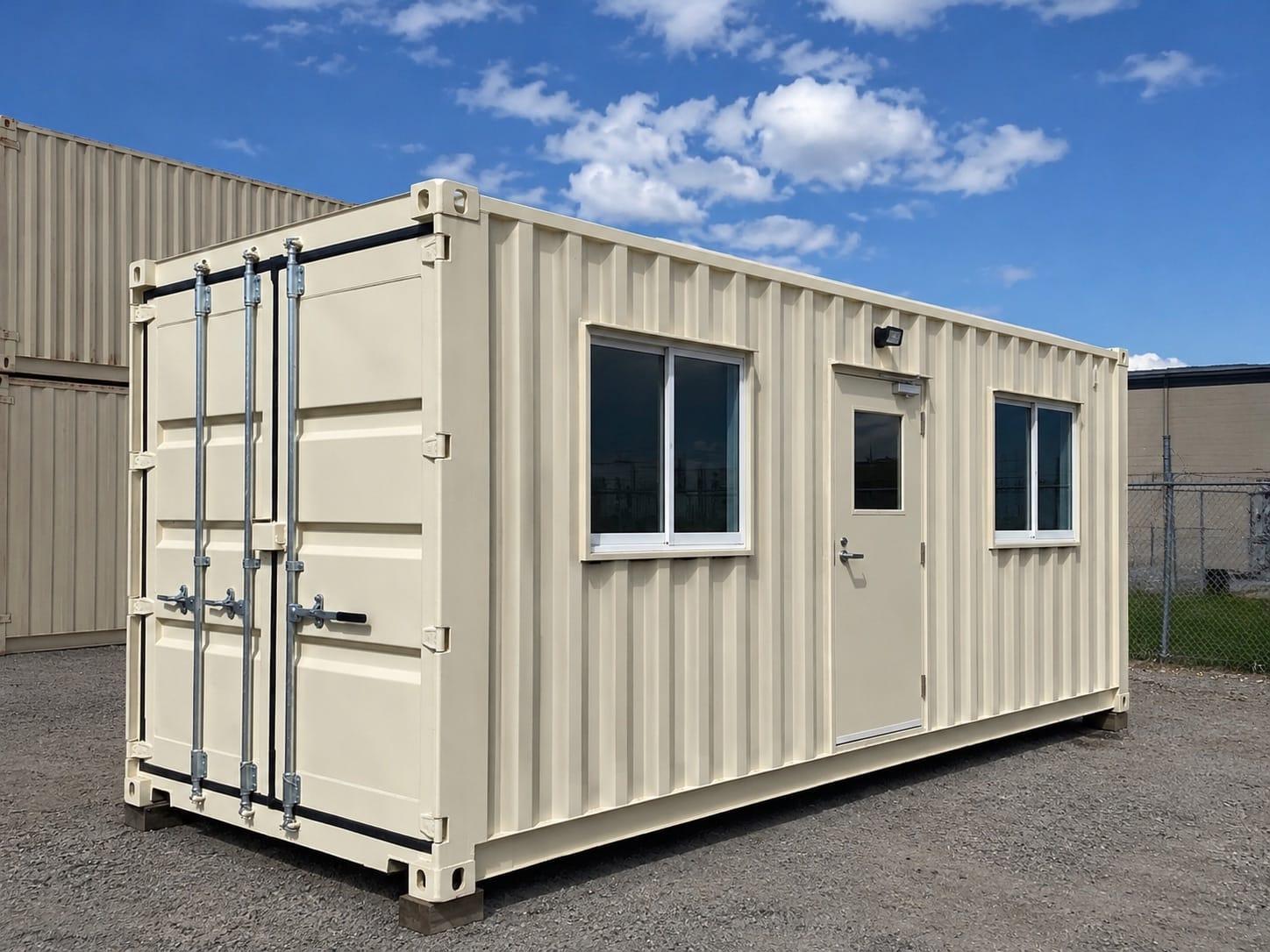
Custom container solutions, built in Kamloops
Custom containers for work and for living: site offices, workshops, farm storage, cold storage, pop-up shops, bunkies and turnkey container homes — designed around your project, built in our own yard and delivered anywhere in BC. Insulated site offices from $12,350 CAD; bunkies and modular homes are quoted per project.