
 DOUBLE DOOR
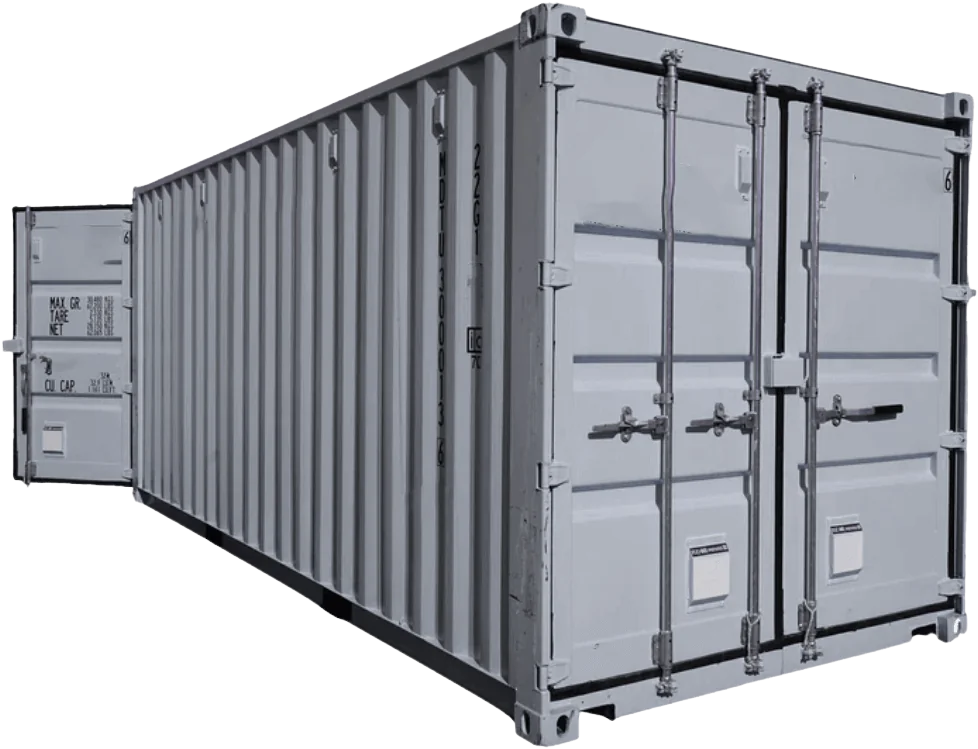
20' Double Door Container
20ft · New (one-trip) · Delivered across BC
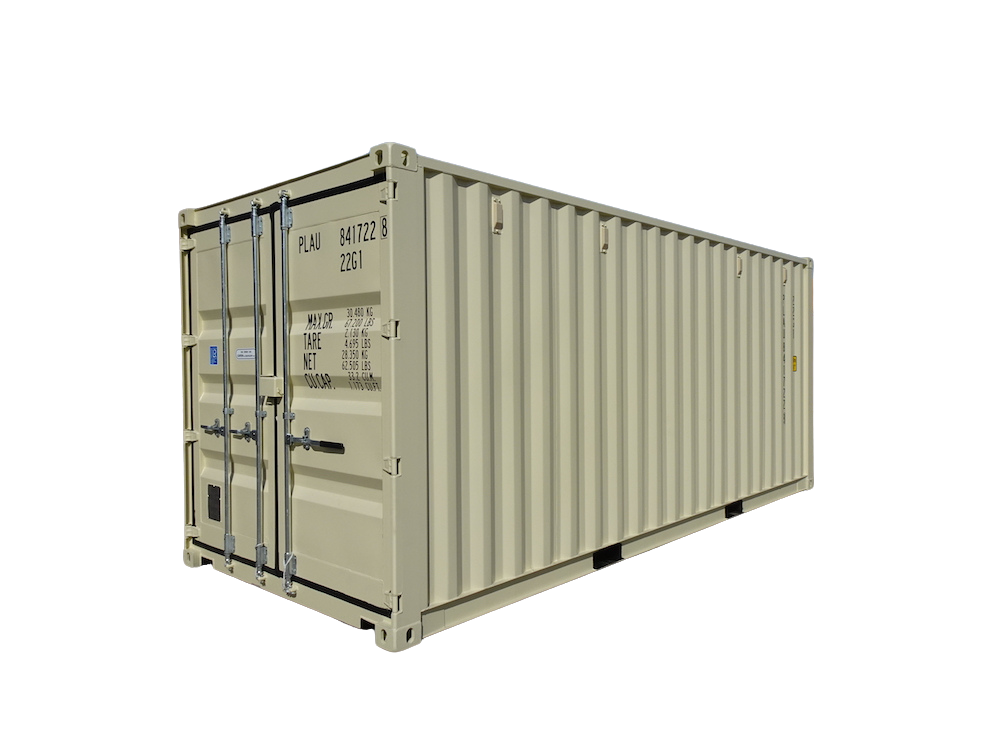
A 20ft double-door (tunnel) container has full cargo doors on both ends, giving you pass-through access from either side. In BC it runs $4,800–$5,500 CAD plus tax and delivery. The dual openings make loading, unloading, and organizing far easier — ideal for high-turnover storage, drive-through layouts, and equipment you need to reach from both ends.
- Doors at both ends
- Pass-through access
- Wind & watertight
- Structural warranty
Specifications
- Size
- 20ft
- Condition
- New (one-trip)
- External dimensions
- 20' × 8' × 8'6"
- Internal volume
- ~1,170 cu ft
- Maximum payload
- 25,000 kg
- Price (CAD)
- $4,600–$5,000 + tax & delivery
Design it in 3D. Take a 10ft, 20ft or 40ft high cube into the Container Studio — position the doors and windows, pick framing and insulation, and watch the estimate build from the same catalogue this page prices from.
Container StudioWhat people use it for
Common applications for the 20' double door container across Interior & Northern BC.
- High-turnover inventory storage
- Drive-through / pass-through layouts
- Long items loaded from both ends
- Job-site staging
Custom Solutions
Custom container solutions, built in Kamloops
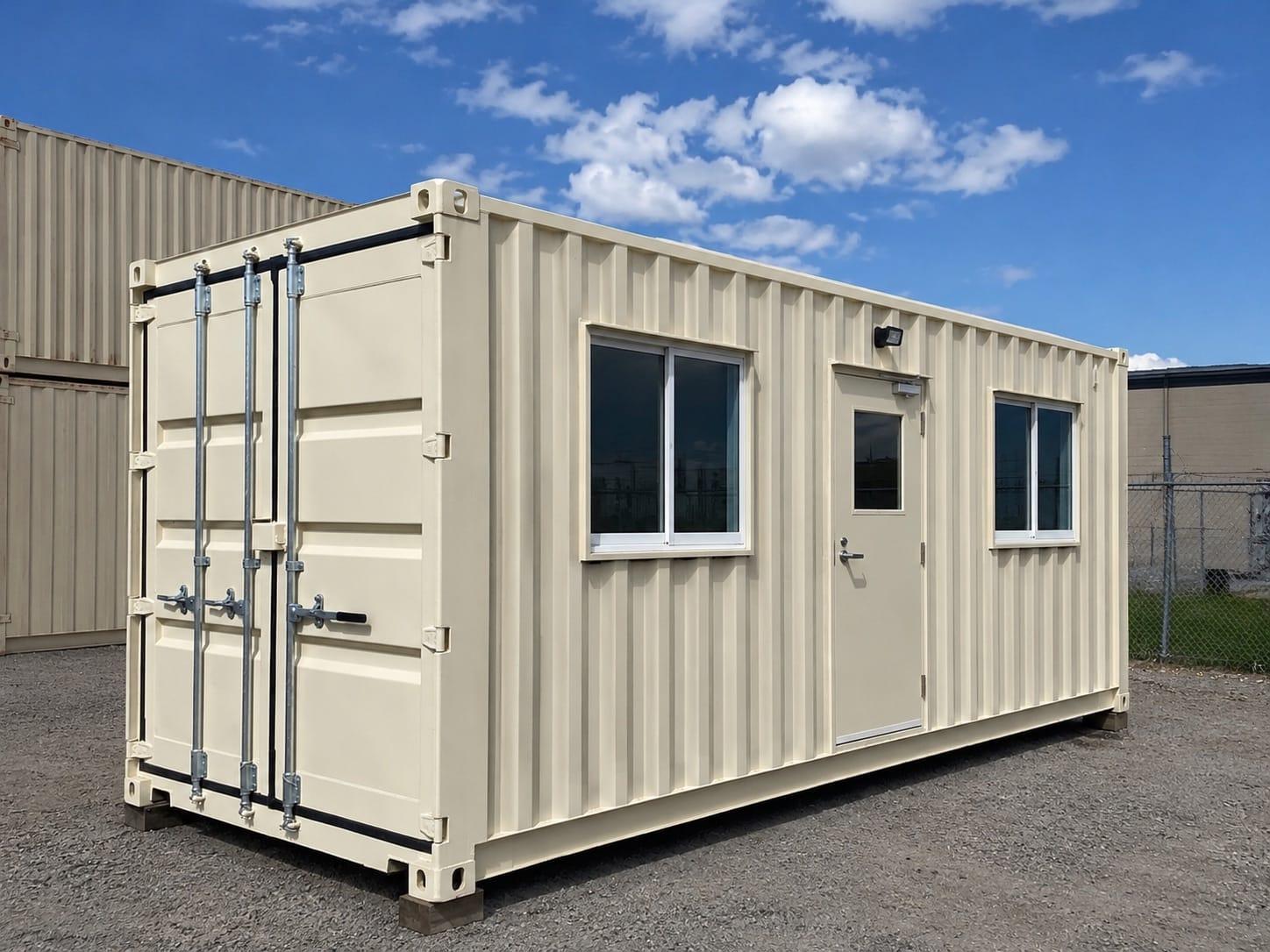
Custom containers for work and for living: site offices, workshops, farm storage, cold storage, pop-up shops, bunkies and turnkey container homes — designed around your project, built in our own yard and delivered anywhere in BC. Insulated site offices from $14,600 CAD; bunkies and modular homes are quoted per project.
20' Double Door Container — frequently asked questions
About the 20' Double Door Container
Why choose double doors over a standard container?
Double (tunnel) doors let you load and unload from either end, so you never have to climb over stored items to reach the back. It's a practical layout when you access contents frequently.
How much does a new 20ft double-door container cost in BC?
The new 20ft double-door container is listed at $4,600–$5,000 in Canadian dollars, plus tax and delivery. Where a unit falls in that range depends on the unit and where it’s sourced. Delivery is quoted for your site by distance and access, and your quote shows the container and delivery together before you commit.
What are the inside and outside dimensions of the new 20ft double-door container?
Outside, it’s 20ft long, 8ft wide and 8ft 6in tall, the same as a standard 20ft, and it covers 160 square feet of ground. The catalogue lists the same internal volume as a standard 20ft, roughly 1,170 cubic feet; a standard 20ft measures about 19ft 4in long, 7ft 8in wide and 7ft 10in high inside. Ask Valleyview to confirm the inside measurements and door openings of the unit you’re quoted.
How much weight can the new 20ft double-door container carry?
Valleyview’s catalogue lists a maximum payload of 25,000 kg for the new 20ft double-door container. That’s a catalogue figure for this type of container, not the rating of a specific unit, so mention any unusually heavy or concentrated load when you ask for a quote. The floor is plywood or bamboo over steel cross-members, and it carries things like pallet racking, a welder, a quad or a pallet jack.
Is the new 20ft double-door container a one-trip unit?
Yes. Valleyview lists it as new (one-trip): built overseas, loaded once for a single voyage to North America, then sold. Expect straight walls, intact factory paint, tight door seals and an unstained floor, without the rust and dents of a working life. That suits a site where looks matter, such as a customer-facing business.
Does the new 20ft double-door container come with a warranty?
Yes. As a new one-trip container, it comes with a manufacturer’s warranty for structural integrity and watertight condition. Valleyview doesn’t publish its length or claim process on the website, so ask for the warranty details on the unit you’re quoted and keep them with your invoice. Inspect the container when it arrives and note any damage on the delivery receipt before you sign.
How does the double-door 20ft compare with a standard new 20ft on price?
The double-door 20ft is listed at $4,600–$5,000 and a standard new 20ft, with cargo doors at one end only, at $3,700–$4,200, both plus tax and delivery. They share the same outside size and listed internal volume, about 1,170 cubic feet, so the main difference is the second set of cargo doors.
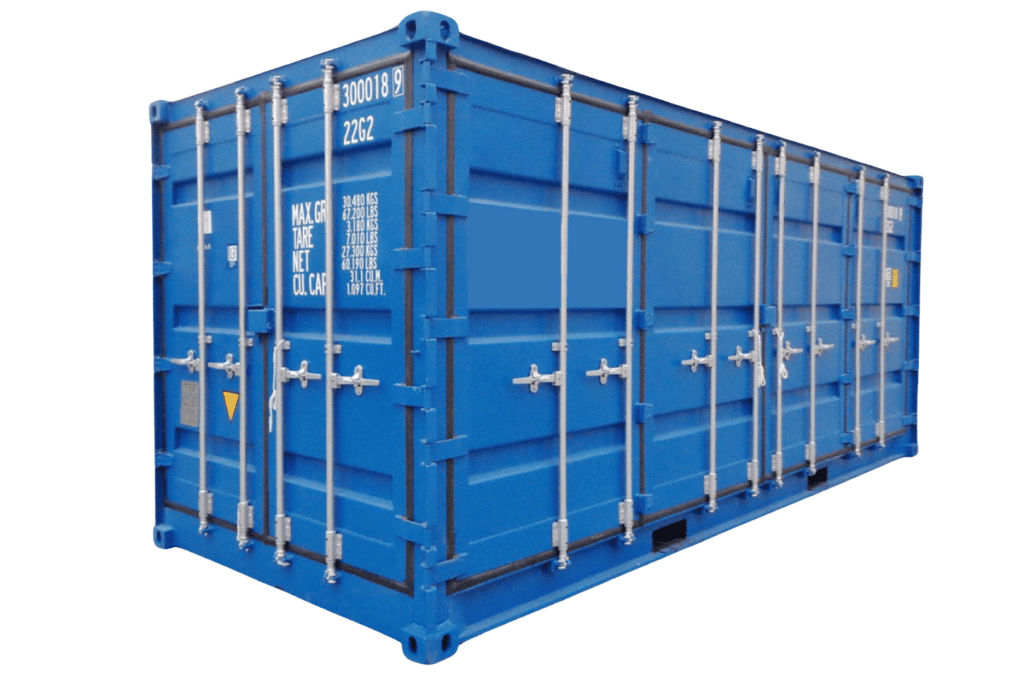
Should I choose a double-door or a side-door 20ft container?
Choose the double-door to load from both ends or pass items straight through; choose the side-door to reach any point along the length without moving other things, which suits shelving, tool and parts storage, workshops and retail setups. The double-door 20ft is listed at $4,600–$5,000 and the side-door 20ft at $6,600–$9,000. Both are new, both prices are plus tax and delivery, and the two units share the same outside size.
What colour does the new 20ft double-door container come in?
Valleyview confirms the colours available for this model with your quote; factory RAL colour options and colour-based pricing are only published for the standard new 20ft. If you need a particular colour, the container can be painted in a RAL colour you choose at the Kamloops yard before delivery, quoted per design, which is easier than painting it on site.
How is the new 20ft double-door container delivered, and how much room does the truck need?
It usually comes on a pickup with a 22-foot deckover tilt trailer, and the container slides off the back onto your prepared spot. Allow 72 feet of straight, clear length, including where the container will finally sit, at least 10 to 12 feet of width through gates and driveways, and 16 feet of overhead clearance free of wires and branches. The truck can’t turn while unloading, so send photos of the route if you’re unsure.
Watch the delivery guideWhat should the new 20ft double-door container sit on?
Firm, level, well-drained ground: a compacted gravel pad, asphalt or concrete, with blocks or railway ties under the four corner castings to lift the steel and let air move underneath. Set the corners level with each other before delivery day, because a container on uneven ground twists and its doors bind. Leave clear, level ground at both ends so each set of doors can swing fully open.
Can the new 20ft double-door container be modified?
Ask first: no published build package starts from a double-door unit, and the Container Studio models containers with cargo doors at one end, so work on a double-door unit is quoted for your design. Tell Valleyview what you’re planning, such as shelving down both walls, a personnel door or insulation, and items from the modification menu can be discussed, with fitment and price confirmed in an itemized quote before any steel is cut.
What is the new 20ft double-door container used for?
Valleyview lists it for high-turnover inventory storage, drive-through or pass-through layouts, long items loaded from both ends and job-site staging. Before delivery, decide which end should face your driveway or work area, because you confirm the placement and orientation with the driver on delivery day.
How do I lock the new 20ft double-door container?
Plan for both ends, because there are two sets of cargo doors to secure. A welded steel lock box over a puck lock is the usual setup for job sites and rural properties, and a lock box can be welded on at the Kamloops yard as part of Valleyview’s modification work, so ask when you order. Avoid an open-shackle padlock on a bare hasp, and set the container where both ends are in view of the house or site if you can.
Can I see the new 20ft double-door container I’m buying before I order?
For units in Valleyview’s Kamloops yard, yes. The inventory page lists only containers physically in the yard, each with a photo where available, its recorded condition and its unit number when legible, and you can see them in person at D3-1764 Kelly Douglas Rd, open seven days a week from 10:00 AM to 6:00 PM. If none is listed, Valleyview sources from partner depots across Canada, so ask what photos and condition details come with your quote.
See the yard inventoryCan I get the new 20ft double-door container on lease-to-own?
Lease-to-own is offered on 20ft and 40ft containers, and your quote confirms whether this model qualifies. You make monthly payments toward ownership, with the payment, term and delivery quoted together up front, and you can pay out the balance early whenever you like. The monthly amount depends on the container’s size, condition and delivery location. Valleyview doesn’t rent containers; lease-to-own is its only financing option.
How lease-to-own worksSizes & specs
How much headroom is left after insulating a shipping container?
In a standard-height container, expect a finished ceiling somewhere under 7ft 6in. A standard box starts at about 7ft 10in high and 7ft 8in wide inside; insulation, strapping and a ceiling can take six inches or more of headroom, and two inches of foam on each side wall brings the width close to 7ft 4in. A high cube starts at about 8ft 10in, which is why Valleyview steers insulated, occupied spaces toward one.
Insulating a containerHow do I measure my site for a shipping container?
Start with the footprint: mark a rectangle 8ft wide and as long as the container, plus clear space at the door end to swing the doors open and load. Check the spot is level, firm and drains well. For a 20ft, the truck needs about 72 feet of straight, clear length ending at the container’s final spot, at least 10 to 12 feet of width and 16 feet of overhead clearance; a 40ft needs at least 110 feet and more overhead room, so ask for the height your site needs. Photos of the spot and approach help Valleyview advise before you order.
Watch the delivery guideNew & used containers
What should the floor of a used container look like?
Solid underfoot, with no soft, swollen, sagging or rotted boards. Light surface staining is normal on a used deck; walk the full length, bounce on it, and look for dark rings that point to a past leak. Note any chemical or pesticide smell, which can rule a unit out for food, residential or sensitive storage. Valleyview will describe the floor of a container on its list before you commit.
Container flooring guideWhat is a shipping container floor made of?
A standard container floor is a deck of marine-grade plywood about 28 mm (1 1/8 inches) thick, screwed to steel cross-members that run side to side about a foot apart. It is traditionally dense tropical hardwood plywood, and newer units increasingly use bamboo or a bamboo-hardwood composite. The deck is treated with insecticide and fungicide at the factory, so for food storage or living space, cover it properly or replace it.
Prices
How much more does a new 20ft container cost than a used one?
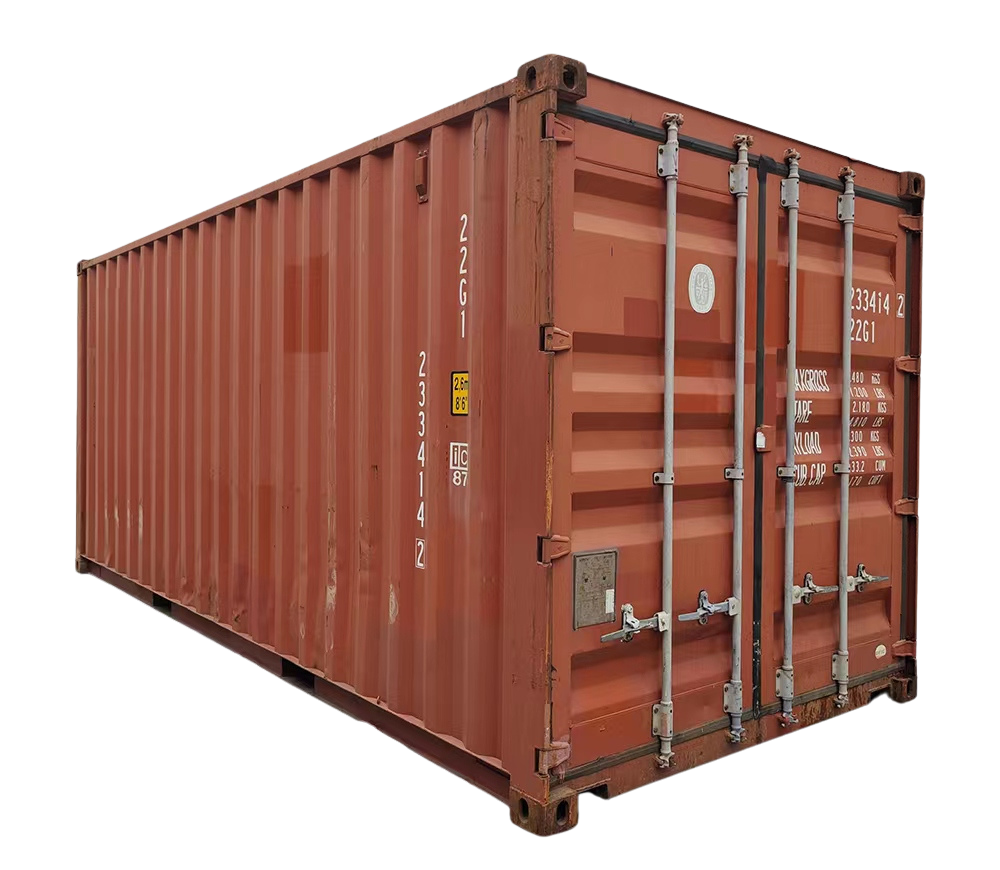
A new one-trip 20ft is listed at $3,700–$4,200 and a used cargo-worthy 20ft at $2,500–$3,000, a difference of $1,200 at the low end of each range, before tax and delivery. Both hold about 1,170 cubic feet. The extra buys factory paint in a choice of RAL colours, minimal wear and a manufacturer’s warranty. The used unit shows surface rust and dents and is sold without a warranty except as required by law, but it’s inspected and wind and watertight before it’s sold.
Container condition gradesBuying & paying
Is a container quote free, and does asking for one commit me to buy?
Quotes are free, and requesting one does not commit you to anything. Under Valleyview’s terms, a quote is an invitation for you to make an offer to purchase, and an order is only confirmed once Valleyview accepts it and issues an invoice or confirmation. You can take time to compare sizes, check your site and confirm local rules with your municipality or regional district before you decide.
Read the termsDelivery
What should I check when my container arrives?
Check the doors, the floor and the overall condition before you sign. Make sure both doors swing and lock cleanly, look for soft spots in the floor, and stand inside with the doors shut to look for pinholes of daylight along the roof and door seals. Under Valleyview’s terms, any damage or discrepancy has to be noted on the delivery receipt at the time of delivery.
Preparing your site
Can a shipping container sit on an asphalt driveway?
Yes, asphalt is one of the firm surfaces Valleyview’s delivery guide lists, along with compacted gravel and concrete. The surface still needs to be level and shed water away from the container, and the truck needs a straight run to it that includes the container’s final position. If the driveway sits near a property line or road, ask your municipality or regional district what setbacks apply.
Owning a container
Can I sell my container later if I no longer need it?
Yes. Once it is paid for, the container is your property to keep, move or sell. Valleyview does not advertise a buyback or trade-in, so plan on selling it yourself. A buyer will judge it the way you did, by the doors and seals, roof, floor, rust and unit number, so routine maintenance and good records make it easier to show its condition.
Permits & bylaws
Can a bylaw require screening or a certain colour on a shipping container?
Some can, so ask. A local bylaw or development permit area may ask for fencing or landscape screening, restrict placement in a front yard, or call for a particular or neutral finish instead of faded or weathered paint. If a colour is required, tell Valleyview when you ask for a quote. New 20ft containers can be ordered in a range of factory RAL colours, and Valleyview can repaint a container in a RAL colour at its yard before delivery.
Custom builds
Do I have to enter my contact details to use the Container Studio?
No. Open the Valleyview Container Studio and start designing, with no sign-up. Your name, email and phone are asked only when you send the design for a quote, download the build summary or save the tour video, and that browser remembers them for next time. Valleyview uses them only to follow up on your design. The studio is free to use, and nothing is ordered or paid for inside it.
Business & lease-to-own
Is lease-to-own only for businesses?
No. Valleyview’s lease-to-own page names trades and contractors, farms and rural properties, new and growing businesses, and homeowners and acreage owners. It’s aimed at buyers who need the container on site now but would rather spread the cost into monthly payments; approval and terms are confirmed with your quote.
Refrigerated containers
Can I get a refrigerated container on lease-to-own?
It may be possible; whether a particular reefer or cold storage build qualifies is confirmed in your quote. Lease-to-own, with monthly payments that build toward ownership, is Valleyview’s only financing option, and you can pay out the balance early whenever you like. Valleyview doesn’t rent containers, refrigerated or otherwise, so there is no short-term reefer rental, and the container is yours once it is paid off.
How lease-to-own worksUses
Can a shipping container be used as a bunkie or guest cabin?
Yes. A bunkie is a room to sleep in, usually built in a 20ft, or in a 40ft high cube when it needs two beds or a washroom. Insulation and framing are chosen for the site and the season you’ll use it, and a washroom with fresh-water and waste tanks, a water heater and a pump can be added. Valleyview quotes every bunkie per design rather than from a price list. People sleep in it, so ask your local government how it will be classified before you order.
Container bunkiesStill have a question? Call (778) 694-4050 or see the full FAQ.