
Shipping Containers in the Sea-to-Sky
Valleyview Containers delivers new and used shipping containers across the Sea-to-Sky — the Sea-to-Sky corridor from Squamish to Pemberton. We serve 8 communities in the region, with used 20ft sea cans from $2,500 CAD and delivery quoted by distance and site access from our nearest depot.
Planning custom containers for the Sea-to-Sky? The Container Studio lets you lay out site offices, bunkies and modular homes in 3D — pick a size, move the doors and windows, then send us the design to quote.
Wondering how the drop itself works? Watch our 30-second delivery guide before you book.
Communities we serve in the Sea-to-Sky
Choose your community for local shipping container sales and delivery details.
Custom Solutions
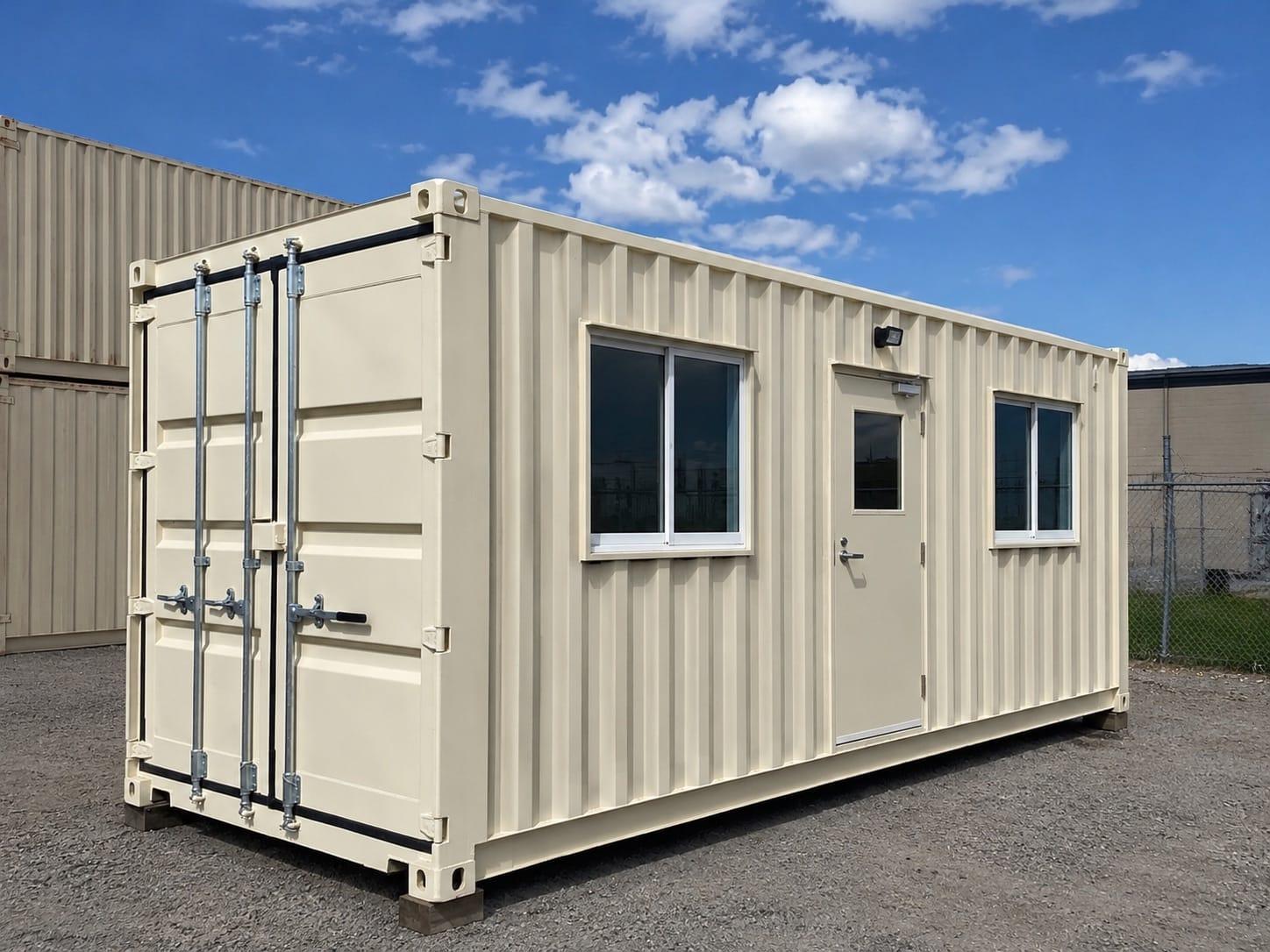
Custom containers, built for the Sea-to-Sky
Custom containers for work and for living: site offices, workshops, farm storage, cold storage, pop-up shops, bunkies and turnkey container homes — designed around your project, built in our Kamloops yard and delivered to the Sea-to-Sky. Insulated site offices from $14,600 CAD; bunkies and modular homes are quoted per project.
Popular here: Garden Suites & ADUs — A single-container backyard suite or studio: engineered, permitted, finished in Kamloops, set in your yard.
Sea-to-Sky shipping container FAQ
Straight answers on buying and delivering containers anywhere in the Sea-to-Sky corridor from Squamish to Pemberton.
Buying in the Sea-to-Sky
Do you deliver shipping containers across the Sea-to-Sky corridor?
Yes. Valleyview delivers new and used containers across the Sea-to-Sky corridor, including Squamish, Whistler, Pemberton and Britannia Beach, as well as job sites, residential lots and rural properties. Distance changes the delivery quote, not whether delivery is possible. What decides whether a particular site works is the route in and the space at the drop spot, and Valleyview can check yours before you order.
Which communities in the Sea-to-Sky corridor have their own Valleyview page?
There are eight: Britannia Beach, D’Arcy, Furry Creek, Mount Currie, Pemberton, Pemberton Meadows, Squamish and Whistler. Each has its own page on buying and delivering a container there. If your community isn’t listed, Valleyview still delivers there, including rural addresses and First Nations communities between the listed towns. Give your town or postal code in a quote request, or call (778) 694-4050.
Is there a Valleyview yard or depot in the Sea-to-Sky corridor?
No. Valleyview doesn’t operate a yard or depot in the Sea-to-Sky corridor; its only yard is in Kamloops. The units on the live inventory page are physically in that yard, and when the size or grade you want isn’t there, Valleyview can source it from partner depots across Canada. Either way, your quote covers the container and its delivery to your site together.
Why do delivered container prices vary across the Sea-to-Sky corridor?
Because delivery is quoted for each site rather than at a flat regional rate. The quote reflects the distance, the roads on the way in and how easily the truck can line up and back in, so a site beside the highway and one up a long gravel road are quoted differently, even near the same town. Part of a container’s price also depends on where the unit is sourced. Delivery quotes are free, so ask for one to your own address to see the all-in figure.
How long does it take to get a container delivered in the Sea-to-Sky corridor?
For a site in the Sea-to-Sky corridor, the delivery date is agreed when you order rather than promised in advance. It depends on the container you choose, whether it’s in the Kamloops yard or coming from a partner depot, how far your site is and what the access is like. With your quote, Valleyview confirms access and gives you a delivery window. If you’re working to a deadline, such as a job start or a move, say so when you ask.
Can a container be delivered to a cabin or rural property in the Sea-to-Sky corridor?
Yes, as long as the truck can get in, line up and set the container down. Valleyview’s trucks run gravel roads, forest service roads, switchbacks and seasonal access, and each route is planned the way it actually drives: approach, turnaround and set-down, with a backup plan where a bridge weight rating is in question. For a site with no street address, send GPS coordinates or a map pin and describe the road in, including gates, forks and creek crossings.
Can a container be delivered in the Sea-to-Sky corridor in snow or heavy rain?
Yes, when the roads and your site allow it, and the date is agreed when you order. Heavy rain softens lawns, fields and unpaved driveways, so choose a firm, well-drained spot rather than a low area that holds water, and call before delivery day if the ground has gone soft. Clear snow from the path and drop spot. Winter conditions on mountain highways can also move a date, and Valleyview’s terms exclude liability for weather delays.
How do I know the delivery truck can reach my property in the Sea-to-Sky corridor?
Have Valleyview check it before you order. Send photos or a short video of the whole path from the road to the drop spot, showing gates, turns, slopes, soft ground and anything overhead, and Valleyview will advise whether the truck can get in. A property can often be assessed from satellite imagery or a quick video call. For a rural or remote site, include the last stretch of road and any bridges on it.
Can you deliver a container to a construction or job site in the Sea-to-Sky corridor?
Yes. A job site needs what any delivery does: firm, level ground where the container will sit and a straight, clear approach for the tilt-deck truck, with room overhead. Keep that path free of machines, material piles and parked vehicles on the day, and name a site contact who can meet the driver, confirm placement and sign the delivery receipt. Check with the property owner and the local government where a container is allowed on the site.
What information do I give for a container quote in the Sea-to-Sky corridor?
Start with the size and condition you want, your timeline and your community, such as Squamish or Whistler, or a postal code. Send them by phone at (778) 694-4050, by email at valleyviewcontainers@gmail.com or through the quote form. Before you order, share the full address, or coordinates for a rural site, so the route and drop spot can be checked. The quote is free, doesn’t commit you to buy, and gives the container and delivery as one all-in price, plus tax.
Do I have to come to Kamloops to buy a container for a site in the Sea-to-Sky corridor?
No. You can get a quote and order by phone or email, and the container is delivered to your site. For units in the Kamloops yard, the inventory page shows a photo when one is available, the recorded condition and the unit number when legible, and you can ask for a fuller description before you commit. When it arrives, you or someone you designate inspects it and signs the delivery receipt, noting any damage then.
See the yard inventoryCan I rent a shipping container in the Sea-to-Sky corridor?
No, Valleyview doesn’t rent containers, but lease-to-own is available in the Sea-to-Sky corridor on 20ft and 40ft units. You make monthly payments that build toward ownership, and the container is yours at the end of the term, or sooner if you pay out the balance early. The monthly amount depends on the container’s size and condition and on your delivery location, so the quote itemizes the payment, the term and delivery for your site.
How lease-to-own worksCan one order cover containers for several sites across the Sea-to-Sky corridor?
Yes. A multi-unit order can go to several sites on one coordinated schedule, or arrive in stages as each site is ready, with volume pricing and matching size, grade and colour where you want them. Each address is quoted for its own distance and access, so list every site and what the access is like, and name someone at each one to meet the driver. The whole order runs on one quote and one invoice.
Fleet and bulk ordersDo you deliver modified containers, such as site offices and workshops, to the Sea-to-Sky corridor?
Yes. Custom builds are done in Valleyview’s Kamloops yard, where openings are cut and framing and insulation go in, while a licensed electrician Valleyview contracts roughs in the electrical. Each finished unit is delivered, usually by tilt-deck like a plain container, on one itemized quote. Site offices, workshops and pop-up shops have published starting packages; garden suites, bunkies and homes are quoted per design, and any crane needed is its own line. You can lay out a design in the Container Studio. For anything people will live or work in, check with your local government first.
Try the Container StudioHow should I look after a container through the seasons in the Sea-to-Sky corridor?
Plan mainly for moisture. In a wet climate, condensation is a year-round concern, so keep the built-in vents clear, add vents or desiccant to a unit that stays closed up, and keep stored items dry. Set the container on a level, well-drained pad on blocks, and if it sits near salt water, wash the outside once a year. Where snow piles up, clear it off the roof. If you insulate, keep the insulation continuous so damp air can’t reach the steel.
Are the rules for shipping containers the same everywhere in the Sea-to-Sky corridor?
No. The rules depend on where the property is and how you’ll use the container. Inside a municipality, ask its planning or building department; outside municipal boundaries, it’s usually the regional district. On First Nation reserve land, ask the Nation’s own office, and land in the ALR can involve the Agricultural Land Commission. Give them your address and intended use, ask what’s required, and get the answer in writing before delivery.
Container permit guideSizes & specs
What kind of doors does a standard shipping container have?
A standard container has a pair of steel cargo doors at one end, with the hinges welded to the frame, and both doors should swing and lock cleanly. The door opening is about five inches lower than the interior ceiling. If you need access from both ends or along the side, look at a double-door or side-door container, or ask about cutting in a man door or roll-up door as a modification.
New & used containers
What is a shipping container floor made of?
A standard container floor is a deck of marine-grade plywood about 28 mm (1 1/8 inches) thick, screwed to steel cross-members that run side to side about a foot apart. It is traditionally dense tropical hardwood plywood, and newer units increasingly use bamboo or a bamboo-hardwood composite. The deck is treated with insecticide and fungicide at the factory, so for food storage or living space, cover it properly or replace it.
Prices
How much does a used 40ft shipping container cost?
A used 40ft standard-height container is listed at $3,300–$3,600 plus tax and delivery, and a used 40ft high cube is listed at $3,500–$4,000. Both are cargo-worthy units, inspected and wind and watertight before they’re sold. The standard 40ft holds about 2,390 cubic feet, and the high cube, a foot taller, about 2,690. Delivery is quoted separately, and a 40ft needs more room on the route and at the drop spot than a 20ft.
Buying & paying
How do I order a shipping container from Valleyview Containers?
Start by asking for a quote by phone at (778) 694-4050, by email at valleyviewcontainers@gmail.com, or through the quote form on the website. Say which size and condition you want and where it’s going, and Valleyview quotes the container and delivery to your address together. When you accept the quote, Valleyview confirms the order by issuing an invoice or confirmation, and delivery terms and scheduling are agreed at that point.
Request a quoteDelivery
Is a 40ft container harder to deliver than a 20ft?
It needs more room. A 20ft needs 72 feet of straight, clear length including the container’s final spot; a 40ft needs at least 110 feet, plus more overhead room while the deck tilts, so ask for the height your site needs when you book. A 20ft is easier and cheaper to move, which matters on tight lots and narrow driveways. Both need a straight, clear path for the truck, open overhead space and firm, level ground where the container lands.
Compare 20ft and 40ftWhat should I check when my container arrives?
Check the doors, the floor and the overall condition before you sign. Make sure both doors swing and lock cleanly, look for soft spots in the floor, and stand inside with the doors shut to look for pinholes of daylight along the roof and door seals. Under Valleyview’s terms, any damage or discrepancy has to be noted on the delivery receipt at the time of delivery.
Preparing your site
What foundation does a container office, suite or home need?
It depends on the use, the site and your local government. An office or workshop can sit on a slab, gravel pad or blocking without a poured foundation, but one people work in may be reviewed like a small building, with foundation and anchoring details on stamped drawings. A home or garden suite does not sit on blocks: the engineer chooses piers, screw piles, a grade beam or a slab from the soil, frost depth and loads. Ask your municipality or regional district before the container ships.
Container home permit guideDoes a shipping container need to be anchored or tied down?
That depends on the use and the location, so ask your municipality or regional district what applies to your property before delivery. A storage container is normally set on a level pad or on blocks under its corners. Once a container is treated as a building, anchoring designed for wind and seismic loads can be part of the stamped drawings, and for a home the engineer details how the corner castings tie down.
Owning a container
Will mice or rats get into a shipping container?
Not easily, as long as the doors stay closed and the gaskets are in good shape. The walls, roof and doors are steel, and the rubber door gaskets close the gap at the doors. The usual ways in are a door left open, a damaged seal, or something carried in, such as bagged feed, so keep stored goods on shelving or pallets. The floor is plywood on steel cross-members; where rodents are a real concern, ask about closed-cell foam under the floor, which seals the plywood underside.
Permits & bylaws
How much does a container permit cost, and how long does approval take?
Valleyview cannot give a number for either, because neither is Valleyview’s to control. Review time depends on your municipality or regional district and on whether the application is complete the first time. Permit fees are set locally and are not part of Valleyview’s quote, and neither are energy advisor, septic design or connection fees. On a custom build, the quote lists what engineering coordination it includes. Ask the building department about fees and review time before you plan your schedule.
Custom builds
Should I choose steel stud or wood framing inside a container?
Steel stud framing is Valleyview’s standard for insulated builds, because it doesn’t rot, swell or feed mould when condensation shows up inside a steel container. Wood stud framing costs less and is available where cost matters more than moisture, but it isn’t recommended where moisture is a concern. Both are priced per container on the published modification menu, and either can be chosen in the Container Studio.
Business & lease-to-own
Can a farm or ranch buy containers on lease-to-own or in bulk?
Yes. A farm or ranch can buy outright, spread the cost across the seasons with lease-to-own on a 20ft or 40ft container, or order several units at once with volume pricing, for example one for each yard or property. A plain container suits feed, seed and tools, and the farm and ranch storage build adds a personnel door and undercarriage insulation. Tell Valleyview about gates, creek crossings and bridge ratings on the way in so delivery can be planned.
Farm and ranch containersRefrigerated containers
What costs should I budget for besides the refrigerated container itself?
Plan for delivery, priced by distance and site access; any extras such as shelving, racking, a secondary man door or temperature monitoring, each quoted per design; and your own electrician’s work to install the outlet and make the final connection, plus any change your electrical service needs to provide 3-phase power, or a generator on an off-grid site. Tax is added on top. Valleyview quotes the container, extras and delivery together before you commit.
Uses
Can a container be used at an off-grid property or remote cabin?
Yes. Off the grid, a container works as lockable storage or a small workshop, and the questions are power, moisture, frost and security. The basic electrical package is roughed in for your electrician to connect to a generator or solar setup. Vents or desiccant control condensation in a unit closed up for long stretches, closed-cell foam under the floor suits frost-heave ground, and a lock box over a puck lock is the usual rural setup. Describe the road in when you ask for a delivery quote.
Still have a question? Call (778) 694-4050 or see the full FAQ.